"We don't believe what we hear. We have to put a filter, almost instinctively, on whatever is being pitched to us, because we know the game from the other side, and we know that whatever we hear will rarely materialize one-to-one in the future."
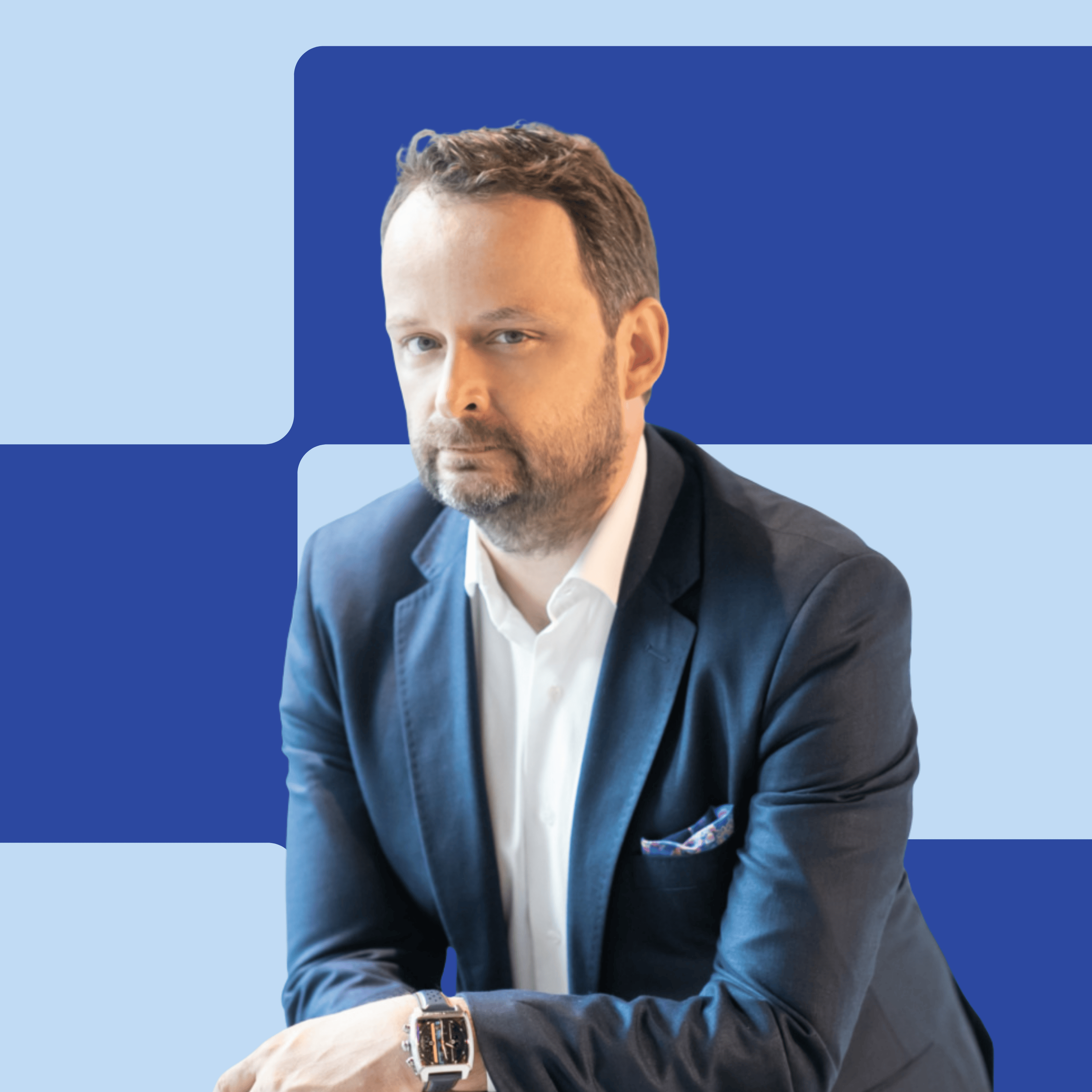
In this episode, I talked with Pawel Szczepanski, CEO of JJP Biologics, a Polish biotech developing next-generation biologics in the personalized medicine space, to hear about his path from investment banking and management consulting into biotech leadership, and what it actually takes to build a clinical-stage company from scratch.
Pawel opens up about the phone call that changed the direction of his career, the proudest moment of his time as CEO, and a startup he tried to build with friends that never got off the ground. We also get into the three pieces of advice he gives every new CEO, why JJP built its culture around courage, and a trend in fundraising that he believes is quietly damaging trust across the industry. Pawel gives his honest take on what is still missing for Poland to produce a true global biotech success story, and outside of work, he is a dedicated traveller who plans every family trip himself, a passion he is now passing on to his two children.
I run Discera Search, retained executive search for Clinical Development and Medical Affairs across DACH and the US. Building a leadership team at a company like JJP? Message me.
How did Pawel Szczepanski get into biotech?
He started in investment banking in Lisbon, moved into management consulting and specialised in life sciences. Then Jerzy Starak, whose family built Polpharma, called and asked him for coffee. That was 14 years ago. Pawel ran strategic projects at Polpharma, set up the family's ventures arm, and now runs JJP Biologics as CEO with a team of more than 50.
What does JJP Biologics do?
JJP Biologics is a clinical-stage, immune-focused biotech in Poland. Its lead asset, nebaprubart, an anti-CD89 antibody, showed its first clinical efficacy signals in an autoimmune disease. A second program, in immuno-oncology, enters the clinic in Q1 next year.
What advice does Pawel give new biotech CEOs?
Three things, in this order. Build a leadership team to carry the growing complexity. Plan for success, and get every stakeholder agreeing on what success looks like. Think three steps ahead, because he has watched plenty of companies make big decisions too late.
Why does over-promising hurt biotech fundraising?
The funding bar keeps rising, so founders promise faster and cheaper to stand out. The VCs JJP works with all tell Pawel the same thing: "We don't believe what we hear." His answer is to hit the dates you set. Partners now take JJP's meetings because it started its first-in-human trial when it said it would.
What does Poland's biotech sector need next?
Pawel sees strong scientists and a strong work ethic in Poland. He wants two things added: more people who have turned research into drug development (JJP pairs a Dutch CSO and an American CMO with a team that's 90% Polish), and local specialist VC funds. Family offices and business angels fund most early-stage Polish biotech today.
Here's What You're In For
- How one phone call from a prominent Polish investor changed his career path
- Moving from investment banking and consulting into biotech leadership
- The text that marked the proudest moment of his career so far
- Why a promising IoT startup with friends still failed
- The three pieces of advice he gives every new biotech CEO
- Building JJP Biologics around courage, teamwork and purpose from day one
- The trend of overpromising in fundraising, and why he believes it fails to build trust.
- Balancing ambitious clinical scale up with keeping the team stable
- What is still missing for Poland to produce a global biotech success story
- Why he still plans every family trip himself, and the road trip that stuck with him most
Timestamps
02:21 – How a phone call from a Polish Investor pulled him from consulting into biotech
04:31 – Career high point: the two-word text that changed everything, and the low point of a startup that didn't survive
07:08 – Lessons learned since becoming CEO, and the three pieces of advice he gives new CEOs
11:47 – What JJP Biologics does, and where the pipeline stands today
12:42 – Building a culture around courage, teamwork and purpose from day one
15:33 – What's next for JJP over the next one to two years
18:13 – The real challenge of scaling a young biotech while staying stable
20:06 – The trend of overpromising in biotech fundraising
23:09 – Balancing youth and experience when hiring as the company scales
26:28 – What makes the Polish life science sector unique, and what is still missing
34:26 – Why travel is his biggest passion outside of work
38:40 – The worst career advice he has ever received
Full transcript: Pawel Szczepanski on A Dose of Reality
Introduction (00:06)
Charles Spence: In today's episode, I'm joined by Pawel, who's the CEO of JJP Biologics. It's a Polish biotech developing novel biologics in the personalised medicine space. With Pawel, we're gonna talk about building biotechs. We're gonna talk about what it's like to work in the Polish life science industry, but we're also gonna look at his journey from M&A and strategy consulting and how that translated into global drug development. We're gonna look as well at what it's like to become a CEO, and learn all about Pawel and JJP Biologics at the same time. Pawel, it's great to have you on here. Fantastic.
Pawel Szczepanski: Thank you, Charles, and thank you for inviting me.
Charles Spence: Well, the first thing, as any British person, we have to start with small talk, right? And we've both come back from Japan. So Pawel, what was the highlight? What was the lowlight for you?
Pawel Szczepanski: I would dare to say that we didn't encounter any lowlights. It was really a trip full of highlights. I was traveling there with my family. We did probably over a thousand kilometers throughout Hokkaido Island, which with the Japanese trains is not that big of a struggle. But Japan really amazed me, amazed my entire family, in terms of the diversity of what you can experience in a very short timeframe, in a very diversified culture and country.
Charles Spence: Yeah. Stunning, Hokkaido. The bullet train's amazing. We did some research: if we had the same bullet trains here in Europe, Pawel, it would take four hours from Berlin to London. So it gives you a bit of an idea of how impressive they are. And we went with a one-year-old child, so that made things extra fun and complicated. We did a farm stay for three nights, which was amazing, also just near Hokkaido. And I think we both made the smart decision of going somewhere cooler rather than the 37 degrees in Tokyo and Osaka. Well, Europe is pretty hot as well. So Pawel, right, there we go. The small talk's done. Appreciate that.
How did Pawel Szczepanski get into biotech? (01:25)
Charles Spence: Let's dive into you a little bit. I always like to start the first questions with how and why people got into the industry. And you have a very diverse background with your education and some of the roles you've been doing. So walk me through it. Why did you go into the industry and how did you get your first job?
Pawel Szczepanski: Funny enough, it really started from a phone call. From a phone call from Mr. Jerzy Starak. At that point, I was involved with the life science industry, working in a management consulting company, a boutique for the pharmaceutical sector. The Starak family, on the other hand, are the leading private investors in the CEE region, known not only for their investment in the regional powerhouse Polpharma, but also for their ethical and socially responsible investments, promoting art and charitable initiatives. And by chance, also one of the top three most affluent families in Poland. So for me to receive a direct phone call from Mr. Starak with a kind invitation to have a coffee together and speak business, it was something remarkable. And I must say, it remains remarkable over the last 14 years of my professional journey, where I'm still involved in the Starak Biopharmaceutical Group.
But ultimately, my professional career started in investment banking. Actually, my first professional engagement was in Portugal, in Lisbon, where I worked at an investment bank. Then I transferred to management consulting. Within management consulting, I started specialising in the life science industry, doing more and more projects for biotech and pharma companies. And then came the phone call I mentioned from Mr. Starak. I switched sides, so to say. I started working in strategic project management for Polpharma. Then within the same capital group, I transferred and created a ventures vehicle for the family and for their new investments. And now I'm growing one of those investments into a successful clinical-stage biotech with a team of over 50 exceptional scientists and clinical experts. So that's my story.
What were the high and low points of Pawel Szczepanski's career? (04:14)
Charles Spence: Amazing. And we will learn more about those exceptional people and trials later on. I always like to understand people's low points in their career and their high points in their career, because that often defines who we are and our experiences. Pawel, do you wanna start with the high or the low point?
Pawel Szczepanski: Let's start high. I remember I was actually at the airport heading for a partnering conference when David, our head of clinical development, texted me two words: "It works." And I immediately knew that it meant that the first two patients dosed with nebaprubart in our first-in-human clinical trial experienced improvement in their disease condition. Being involved and able to really pinpoint the exact moment of years of hard work and scientific brilliance of a team much larger than is possible to mention here today is something truly exceptional. So that's clearly the high point of my career so far.
The lows, of course, were many, but the one I would mention here today is an unsuccessful attempt with a group of my friends at creating a startup. I tried to kick it off with three of my friends, who were engineers in the area of the internet of things. And I still believe that the idea was brilliant. The timing was perfect. That was seven, maybe even more, years ago, for sure before COVID. We were way ahead of the curve in terms of IoT adoption. I remember that we even had a sales meeting with Siemens, which shows that even at that moment in time, those kinds of companies did not yet have the internet of things well organised. But it didn't fly. And the lesson learned, because there's always a lesson to be learned, for me is that ideas, experience, even a great team, are great, but not enough. The intent and full commitment to future success is really crucial to making it happen. Because, as you can imagine, we tried to do that startup as a side gig, aside from our regular jobs. And to this day, I still believe that was the reason why that particular business concept didn't fly.
What advice does Pawel give new biotech CEOs? (06:33)
Charles Spence: I'm gonna go on to your work as a CEO. Not the easiest job, and certainly not easy to be a CEO in a biotech in the kind of fundraising climate that we have right now. So you're coming up to two years as CEO at JJP, and you've sat on boards, right? You've been on the investment side, so you've interacted, I'm sure, with many CEOs. What are some of the lessons that you've learned since becoming a CEO? And then let's translate some of those lessons into advice you would give to people who are a new CEO or thinking about becoming a CEO.
Pawel Szczepanski: At first, I must admit that I probably have a slight cheat code in this respect, because exactly as you mentioned, Charles, I have the privilege of experience on both sides of the discussion, so to say. Prior to becoming the CEO at JJP Biologics two years ago, I also sat on supervisory boards and investment committees. So I was also the counterpart of many CEOs in the past. But I think the lesson learned is still the same: the most important challenge that you have, and the most important need as a CEO, is to maintain clarity. Quite possibly, your day-to-day work when becoming a CEO, from whatever role you grow from, naturally becomes more complex. However, the need from you as a CEO, from your team, from your board, from the investors, is quite the opposite of complexity.
What is really expected, and what's really valuable if you're able to deliver it, is to filter all that complexity out, to do your homework, and then convey a message of clarity about your approach and the plans and undertakings of the company. So that naturally translates into the lessons and challenges. The big challenge for me personally is not to lose sight of the purpose. As a CEO, it is natural to get carried away thinking through the lens of funding rounds, inflection points, stakeholder management, you know it all. But luckily, I personally have a great partnership, a friendship actually, with Louis, the CSO and co-founder at JJP Biologics, who is always there to help me remember that the ultimate purpose of what we are doing remains with the patients, and delivering on the promise of improving their lives.
So the advice, I would keep it short and focus on three points for any newly appointed CEOs. First, build a leadership team to help you manage the ever-growing scale and complexity. Nowadays, differentiated science is a must in biotech, but it is the people around you that make the ultimate difference in being able to deliver on that promise to patients or not. So that would be number one for me, and the order is not a coincidence.
The second one: plan for success. And don't get me wrong, things will go wrong. Take it for granted. There will be moments of setbacks. There will be moments where the science doesn't follow your projections. That's obvious. But at the same time, it's so natural in this business that it's also manageable. Having a clear vision, and also aligning all of the stakeholders on what the exact definition of ultimate success is, to me is the crucial differentiating factor of successful teams in our industry. And backward engineering from that endpoint on the horizon will create the most efficient path to get there. There will not be a straight path. It will be a downhill slalom, so to say. But as long as not only you yourself, but once again the key stakeholders around you, have clarity on that, it's manageable.
And the third and last one in terms of advice: always look not two but three steps ahead. When you think of it, it's quite obvious. I've never seen a biotech, or an early-stage company in any industry, that has taken important steps prematurely. But believe me, I've seen many examples of the consequences of taking such decisions simply too late. So thinking ahead is one of the key pieces of advice that I would give to CEOs.
What does JJP Biologics do? (11:26)
Charles Spence: Well, you've given me a nice platform here, Pawel, to bring us on to the next topic, and that is keeping the mission aligned, keeping the belief in the projects. So perhaps you can start by telling us the mission. For those who haven't come across JJP Biologics, what do you guys do, and how are you trying to help your patients?
Pawel Szczepanski: With pleasure. In a nutshell, JJP Biologics is a clinical-stage, immune-focused biotech that engineers precision medicine to correct derailed immune pathways in the area of autoimmune diseases and cancer. Our lead asset generated the first clinical efficacy signals in an autoimmune disease last year, hence that text message. And our second program, an immuno-oncology program, will enter the clinical stage by Q1 next year.
How does JJP Biologics build and keep its company culture? (12:17)
Charles Spence: Amazing. So you mentioned people are really important, as the senior leadership, for a CEO and any company, right? Absolutely critical. If someone was to ask you, what is the culture? How do you maintain the culture? What is your guys' belief? How do you guys work together? Give us a little bit of an insight there, Pawel, into what you think is unique about your culture and how you maintain that.
Pawel Szczepanski: Here, I might surprise you, Charles, because the values and culture were actually a big topic of our initial discussions in the very narrow team of three to four people when we were creating JJP Biologics from scratch five years ago. And the benefit of that is that we had clarity from the first day, or even from day zero, in terms of what kind of culture we wanted to build and promote within JJP Biologics. And it has proven to be well thought through, at least in that those values are still the ones that we follow five years on.
So once again, the magic three. I would say our first is courage. When you dive deeper into the science behind our programs, nebaprubart, our lead program, is actually the first program globally to have validated the IgA/CD89 pathway. Now we see fast followers, but that's something that we believe is a clear illustration of the scientific, but let's be honest, also the investment, courage that stands as one of the foundations of JJP Biologics.
The second is teamwork. And once again, for a company at our stage of development, where we are building something as a total greenfield, this was natural. It's obvious that when you have four people in the team, there's always somebody who has to set up the printer and somebody who has to take care of invoices, and it doesn't really matter what the function of that person is, what the job description is. You are really united towards a common goal. So teamwork is the second one.
And the third, the sense of purpose. I've spoken a few times about patients and the promise that we believe we have made to them and want to deliver on, and that's exactly what I mean here. And I know that in general, in the biotech sector, we're privileged by the fact that the sense of purpose in our everyday work is so close and so direct. So we benefit from that.
What is next for JJP Biologics, and what gets harder as it scales? (15:16)
Charles Spence: Amazing. So I wanna come on to the cultural piece in a second. So you've got clinical validation. I wanna know what's next, Pawel. What does the future look like for the next one to two years? And then I've got some follow-up questions after that.
Pawel Szczepanski: Sure. Of course, whatever we discuss today will for sure turn out to be different in the future, and that's the beauty of it, that our plans never materialise one-to-one. Although I'm really happy that when we are speaking with potential partners, in BD setups or others, one piece of feedback that we quite often get is: "With you guys, whenever there's a possibility to meet with the JJP Biologics team, I always take the invite, because what does stand out is that you do deliver on your timelines. If we spoke a year ago and you said that within the next 12 months you would initiate your phase one first-in-human trial, I had doubts at the beginning that you would do so. But after you proved me wrong, I do see the value in building credibility by delivering and not over-promising."
That does not mean that we will always deliver on our plans one-to-one, but our plans are ambitious. From a company with one asset and one program in phase one, within the next 12 months we are planning not only to move that asset to the second stage of clinical trials, but also to substantially broaden the clinical program. We are talking about and preparing for phase two clinical trials in more than six indications for that asset. Second of all, our second follow-up program in the immuno-oncology area, as mentioned, enters clinical trials early next year. And that's not all, because we also have a platform of five immuno-oncology, as we internally call them, pillars. So technology platforms that we hope to bring to the clinical stage within the next, maybe not one or two, but rather three or four years. So as you can appreciate, quite interesting times are in front of us.
Charles Spence: Amen. So I've worked with similar companies, both before where you guys are and after where you guys are. Multiple indications, multiple stages, from IND, preclinical, clinical entry, and then starting to scale up to phase two, and then hopefully phase three and commercialisation. But going to just the stage you are at, or in general, what do you think becomes difficult, either for you in your position or for CEOs in general, as they start to think about this type of scale-up?
Pawel Szczepanski: One thing that immediately comes to my mind is the challenge of, exactly to your point, building scale: of the programs, of the team, of the resources required, the scale required in the longer run, while at the same time delivering the rather short-term goals. So balancing that, the fact that you are building a car while driving it, is for sure one of the challenging parts of the job. But at the same time, in an entity such as ours, a relatively young company, a big challenge, and one that has changed over time, is creating a perspective of stability, predominantly for the team and for potential new hires, but of course also for partners and investors. So the blend of, on one hand, the excitement of doing cutting-edge science, which I hope I've started to convince you that we have at JJP Biologics, with the foundation of stability, which in our case comes from the long-term commitment of a proven investor, is in my experience what really allows us at JJP Biologics to grow and attract them.
Why is over-promising a problem in biotech fundraising? (19:37)
Charles Spence: So managing that investor relationship is critical. And you mentioned making sure you have the resources in the longer run, which I see as the bigger challenge happening in biotech at the moment. Are there any mistakes that you see CEOs make? You've been in the boardrooms, you've been on the investor side. What are some of the more common and costly mistakes people start to make at this stage?
Pawel Szczepanski: I'm not sure that I would go as far as calling them mistakes, because I do understand why this happens, but one phenomenon which I have observed for quite some time already on the market, and I don't consider it positive, is the trend of over-promising. And it's, as I said, to me quite a logical consequence of what's been happening on the funding side of the industry in the last years, where we know the challenges of doing a round are growing, the bar is higher. So if you, as a founder, are somehow stuck in your development process because of limited resources, because of limited funding, and you are aware that you are competing with multiple peers for the same limited pool of money, it's natural that you try to stand out.
And one way of standing out is promising what will happen in the future, whether it's that you will deliver faster or you will deliver with a more cost-efficient approach. But the ultimate outcome is the same, which is that when I speak with the VC funds that we work with, they all say the same thing: "We don't believe what we hear. We have to automatically, almost instinctively, put a filter, a lens, on what's being pitched to us, because we know the game from the other side and we know that whatever we hear will rarely materialise one-to-one in the future." So once again, maybe not a mistake, but that's a pitfall that I would still strongly advise CEOs to do their best to avoid, while still understanding why it's happening. Because at the end of the day, we have spoken for many years now in the business about trust, and over-promising clearly doesn't build that trust.
How do you keep a biotech's culture as the company grows? (22:20)
Charles Spence: I agree, Pawel, and these VCs are very smart and they're pitched to a lot, aren't they? So they're gonna know pretty quickly who's perhaps stretching or over-promising just to get in the door. But like you said at the start of that answer, you can probably understand why people do it, with the ever-increasing bar.
So to wrap up a couple of last questions for JJP: if in the next couple of years you get some of those core programs, some of those larger-scale clinical trials, you're potentially gonna be an even larger company, and it starts to become harder to maintain that cultural identity. So how are you gonna approach that? How will you, even as the company scales and grows bigger, maintain that original cultural mission you had when you were just five people?
Pawel Szczepanski: It's a valid point, and I would dare to say that we are already witnessing that struggle. For me, when taking hiring decisions nowadays, the main axis which we try to optimise on is this one. On one end, you have youth, you have appetite for risk, you have the drive to make a name for yourself, to create something new, to experiment with approaches never validated before, exactly because they are new and have never been validated before. And on the opposite side of the axis, you have the grey hair and the confidence in the way that things should be done, stemming from the experience of delivering the exact same package, the exact same deliverable, many times in the past. That's naturally something that comes maybe not from the simple increase in the scale of the team, but it's clearly related to the fact that our clinical development plan is more and more advanced. So the importance, the gravity, of decisions taken on that path grows exponentially. And for sure that's something that we have in mind, and something that I see as a growing challenge when scaling up the team at JJP Biologics and the programs we manage.
Charles Spence: Yeah. And it's always the challenge, but also the fun element, right? It's never gonna be the same culture as it was 10 years ago, and it shouldn't be. And I think I have the most fun when I work with my leaders trying to understand what that cultural gap is. I do a lot of work in the clinical space. What can happen is you might have a very dominant CMO, a very authoritative leadership style, and then very introverted people underneath. And sometimes it's quite fun working with companies to try to identify where those culture gaps are and how you scale up. And like you said, as you get bigger, okay, you don't want people dealing with printers and invoices, but they still need to maintain that proactivity. If there's a site that's underperforming or things are dragging, you want them to be dealing with it with that same proactive mindset, but just now through a different lens. And I think that's always the fun and challenging part for leaders: to make sure to keep their team constantly in that mindset of problem solving rather than problem avoiding.
Why is Poland a good place to build a biotech? (25:31)
Charles Spence: Let's now, Pawel, go on to the small sales pitch of how amazing Poland is. Poland is a country that I've done a lot of work with, and there are some fantastic life science companies in Poland, but it's also grown massively. So Pawel, I wanna hear from you. Talk to me about the Polish life science space. For people who are not familiar with Poland, let's say they're too busy in boring places like San Fran or Basel, what should they know? What should they know about the talent communities in Poland, and what should they know about the life science industry in Poland in general?
Pawel Szczepanski: Well, the first thing is that if this were a video stream, you would see the first benefit in my background, which would be the perfect weather in Poland, which, quite seriously, with global warming, I think is somehow promoting Poland as a more northern state in Europe. But on a more serious note, you're perfectly right. The Polish life science, and specifically biotech, sector is in a very unique moment, because what I imagine maybe not all of your viewers are aware of is that the Polish life science sector, in its pharmaceutical area, has a very long track record. We have very successful small molecule generic companies like Polpharma, but not only, which have a long-lasting history of regional expansion and beyond over the last decades. It's a little bit different when you think about the biotech part of it, but I think the strengths are common.
And I would say that, the more I dived into the Polish biotech sector over, as mentioned, the last 15 years, what stands out to me is the unique combination of, on one hand, scientific talent with work ethic. Because I would dare to say that you can find scientific talent, brain power, globally nowadays. But I still really want to emphasise that, on one hand, in Poland we have had very high quality and also very high adoption of higher education for over 50 years. I believe that Poland is within the top three countries in Europe in terms of the percentage of the population with a master's degree. The same goes for a good command of foreign languages in Poland. And I will not give negative examples in Europe, but we all know them, where that's not always the case.
But on the other hand, and I think that's what makes Poland stand out, is the mindset of a society that still believes, although the communist times passed away, thankfully, over 30 years ago, and still, when living in Poland, I see the echoes of that, that we should still work harder as a society to catch up with Western European standards of living, standards of doing business, standards of science. So I believe those are the two factors that in combination create a very strong foundation for building the biotech industry in Poland.
And I would dare to say that only two elements are the missing pieces of building a successful ecosystem. One is building more experience in the industry in transitioning great science from research teams into drug discovery processes at biotech industry standards and in biotech company organisational setups. Once again using the obvious example of our own company, JJP Biologics, it's no coincidence that Louis, the CSO I mentioned, is Dutch, and our chief medical officer is American, while still 90% of our team is Polish and is delivering exceptional science. Those proportions show how little, I believe, we still need: a pinch of Western world experience to make it a success. But at the same time, it shows where that experience is really needed.
And the second missing piece, as I personally believe, and this is an opinion which is somehow controversial when I share it in various panel discussions, is that in the Polish biotech sector, we don't lack funding as such. We don't lack capital. What we do still lack is local, regional, specialised VC funds or financial investors. It's not a coincidence that the success of not only Polpharma, but all the other similar-sized companies, was the main engine to finance early-stage biotech companies. So currently in Poland, it's more the family offices or the business angels that are playing a pivotal part in the development of the sector, which in Western European countries, not to mention the US, is already driven by VCs. And I think that's the next step forward in terms of bringing our industry to the common stage that we see.
Charles Spence: And I agree with you. As I said, I've done a lot of recruitment in Poland, and I recruit people from Poland to my clients internationally across all levels, right? From C-suite, VP, to contributor roles, to consultants, et cetera. And perhaps one of the reasons people don't talk about the Polish growth side is that investment, that VC piece. Once you start to get to series B, C, it doesn't really matter so much where those VCs sit. But when you're at seed, angel and A, you're not just getting the capital, you're getting access to advice, you're getting access to the network, you're getting access to people who've been there and done that. And again, obviously with the power of Teams and the internet, it's less of a barrier, but it's still not quite the same as having someone come into the office, meeting people, sharing the same language, sharing other people in their portfolio who are at similar stages, or maybe one stage above, so you can echo them.
So that is 100% gonna be the next step for the Polish community: having a few more of these localised accelerators who can encourage people to take more risks, who can show people what those next paths are. And maybe that's gonna be you, Pawel. That's gonna be you guys, and you show the road with JJP and be the trailblazers for hopefully the next generation.
Pawel Szczepanski: Well, that's of course part of my personal dream. I really believe that the missing step to fill those two gaps I mentioned is really a showcase of the drug discovery, drug development and partnering of a novel therapy from Poland, launched and made available for patients globally. A real success story that would put Poland's biotech on the global map and, let's be honest, increase credibility amongst potential partners. And yes, you're perfectly right. A big part of what we're doing is in the hope that that would be JJP Biologics in the near future.
Charles Spence: Yeah, I agree. Every country needs to have their star name, whether it's a Genmab or an argenx, these kind of unicorn biotechs.
What does Pawel Szczepanski do outside of work? (33:39)
Charles Spence: So, the most important question: when you're not working, what sport, hobby or interest do you have that you could speak about for hours?
Pawel Szczepanski: That's the easy one. In my case, that would be traveling. This is a passion that I share nowadays with my wife, and we are quickly building it in our children too. For the last 25 years, I have not used the services of any travel agency. I organised all of my trips in the past, and nowadays our trips, by myself, and I really love the entire process of doing so. The process in our case usually starts with the coincidental purchase of a plane ticket. We have a, maybe not so short, rather long list of places in the world that we want to visit, and as soon as we identify that there is a good opportunity to purchase tickets to one of those locations, that's where we start from. And that's where the fun part starts: planning the trip.
We read about it. We create, once again, a relatively long list of places worth seeing and visiting during that trip. Nowadays, we get our children involved, and in that part my wife plays a perfect role. She's always able to put together, either from the internet or from any other sources, these booklets with funny facts about the countries, which our children read and fill out even before we get there, and continue on the spot. That builds, at their level of maturity, an understanding of what they will witness and what they are witnessing. And then of course it continues even when we're back. We do debriefing sessions on the highs and lows and what the biggest surprises of the trip were. And of course, the obvious look through the photos. Nowadays, with smartphones and digital cameras, we try our best to organise those thousands of photos in any meaningful way.
And obviously there's a much deeper purpose than only the fact of spending your holiday. I think we all, not only the children, learn a lot from experiencing different cultures, different societies, different cuisines, different religions. So that's something which, as you can already hear after a few minutes, I could speak about for hours. I definitely can, and in a very positive way.
Charles Spence: I love that. Of all your travel, and I'm sure there have been many trips, if you could think of one or two that were pretty transformational, what would they be?
Pawel Szczepanski: One that stands out, although it was quite some time ago, is when we were traveling through Argentina. That was actually more than 10 years ago, before the children arrived, so it was only the two of us, with Mary, already my wife at that moment in time. We were traveling Ruta 40, the trans-Andean route, which back in 2012 was still, in the vast majority, not even paved. So we had this old Ford Ranger pickup, and we were trying to make our way between the gas stations, which in that part of the world are really, really spread apart, and any safe place where we could stay for the night. But the views, the sense of vast space, and the sky and the stars at night, those are things that for sure will stay with us for the long run.
What is the worst career advice Pawel has received? (37:55)
Charles Spence: I love that. Even though I'm an England fan and any mention of the word Argentina pains me, it still sounds like a beautiful trip, Pawel. Last question, and then I promise to let you go. What is the best or worst career advice you've ever received?
Pawel Szczepanski: I think it would be easier for me to come up with the worst one, and that would be one that I got from a headhunter relatively early in my professional life: that I should switch jobs at least every five years. And I think that in my case, being 14 years in different roles, and you could even dare to say in different companies, but still within the same group of entities, the same capital group, that's a piece of advice that I'm happy I didn't put in place.
Charles Spence: And just to confirm, Pawel, which way did you go? Are you saying it's better to change jobs earlier, or is it better to stay with companies longer?
Pawel Szczepanski: I would dare to say that there's no rule. There are for sure companies where staying five years doesn't really make sense, and it's better to change quickly. But there are places, like the one I've been at for the last 14 years, where I dare to say that switching just because of this piece of advice would be premature.
Charles Spence: Amen. No one size fits all, that's for sure. Well, Pawel, it's been an absolute pleasure getting to learn more about you, your views on the world, the great work of JJP and what's gonna be next for you guys, and travel advice as well. So maybe the next podcast we'll hear you on will be a travel-related podcast. It's been an absolute pleasure. As we say in Polish, dziękuję, and thanks so much for your time.
Pawel Szczepanski: Thank you so much. Have a good one.
- More from the podcast: Eliot Forster, CEO of Levicept, on running a six-person biotech through Phase 2
- Hiring for Clinical Development or Medical Affairs? Retained executive search with Discera
- Talk to Charles: Contact Discera Search
- Pawel Szczepanski: https://www.linkedin.com/in/pawelszczepanski/
- JJP Biologics: https://jjpbiologics.com/
- Spotify: https://open.spotify.com/episode/23U3xgowRgDcLfgp1zC4rP?si=4321093aa7ba470a
- Apple Podcast: https://podcasts.apple.com/us/podcast/pawel-szczepanski-ceo-at-jjp-biologics-on-leading-without/id1736051162?i=1000790964068