"We're willing to take extremely high risks in terms of career and testing things in the clinic, and we do that almost routinely and sort of dismiss it as not that important. And the thing that I find ironic is when I think back to Big Pharma, where there was no risk really to one's career, we were much more conservative and risk-averse."
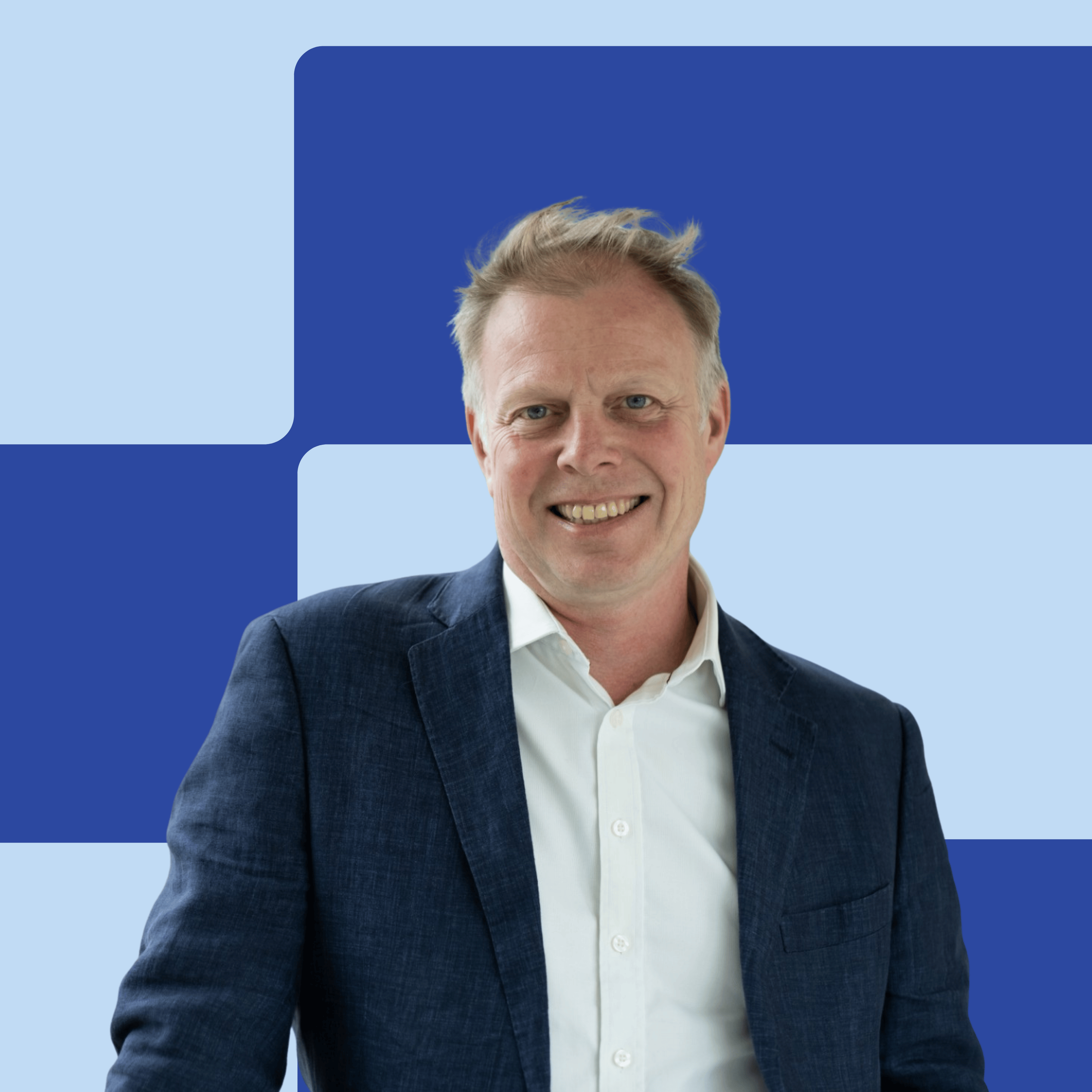
In this episode, I talked with Dr. Eliot Forster, CEO of Levicept, a neurophysiologist-turned biotech veteran with 30+ years of experience across Big Pharma and a series of CEO roles. We get into clinical failures, the realities of running a six-person company through a Phase 2 trial, and what it really takes to lead when the outcome is binary.
Eliot also shares his honest take on the state of European biotech, what he wishes he'd known before his first CEO role, and why he still rolls out of bed excited every single morning. And yes, he also runs a brewery, hosts his own podcast, and still finds time for cricket, golf, and the wildlife of Africa.
I run Discera Search, retained executive search for Clinical Development and Medical Affairs across DACH and the US. Deciding which senior roles to bring in-house, like Eliot talks about here? Message me.
How does a six-person biotech run a Phase 2 trial?
Levicept ran a 520-patient Phase 2 in knee osteoarthritis with six full-time employees. The core team runs everything else through CROs, consultants and experts. Eliot makes it work by keeping a close circle of trusted advisors who stay for the long haul. He expects the team to double to around 12 at the next stage.
What should a biotech keep in-house, and what should it outsource?
Eliot weighs three things: cost, who's available to hire, and how much know-how builds up in the role. He keeps lead scientific, lead medical and lead clinical in-house, and to some extent regulatory and quality. Data handling goes to specialist providers.
Why do biotechs take more risk than big pharma?
In biotech, one trial can end the company, and people take that bet all the time. In big pharma, a failed trial leaves the company and everyone's career intact, and that's where people play it safest. Eliot calls it "the wrong way around."
What do biotech CEOs want from recruiters?
Someone who understands the role and has taken the time to learn the business. "If you call me representing Biotech Y, then you are Biotech Y's representative." Eliot keeps two or three recruiters he calls first, and fills a third to a half of roles through his own network.
Is European biotech struggling?
Eliot says it's in better shape than it's been for a long time. Forbion, Jeito and Sofinnova have all closed big funds, and early-stage money is flowing. The squeeze sits in follow-on rounds for mid-stage companies, which often sends them to the US. In the UK he'd also fix clinical trial recruitment and patient access to new medicines.
What is LEVI-04?
LEVI-04 is Levicept's neurotrophin-3 inhibitor for osteoarthritis pain and function. It hit its endpoint on WOMAC, the regulatory standard for pain, function and stiffness, in a 520-patient Phase 2, and patients tolerated it well. Next up: US studies in patients with higher BMI, and dosing for a year and longer.
Here's What You're In For
- Why getting your first break in pharma through atypical, non-linear routes can be more valuable than a straight path
- What Big Pharma truly gives you, and what you need to unlearn before it stifles you
- The emotional reality of closing a company after a drug failure, and what it means for the people who trusted you
- Why biotech employees take existential career risks while Big Pharma employees with nothing to lose are paradoxically more risk-averse
- How a six-person team took a novel OA drug successfully through a 520-patient Phase 2 study
- The lean biotech model: when it works, when it breaks down, and how to decide what stays in-house
- What Eliot looks for in a recruiter, and why understanding the business is the bare minimum
- Why EU biotech is not as broken as people think, but what three structural gaps are still holding it back
- How CEOs of early-stage companies should think about commercial positioning from day one
- Why forming trust with investors early, rather than treating them as adversaries, is one of the most important lessons in the CEO toolkit
Timestamps
05:08 – How Eliot got his first job: neuroscience PhD, sabbaticals at Merck and Parke-Davis, and landing at Glaxo in 1992
07:55 – What Big Pharma at Pfizer and GSK taught him: leadership, trusting teams, and what "good" looks like
11:18 – Career low point: closing Solace Pharmaceuticals after a failed Phase 2 trial and the personal weight of that moment
15:02 – Why biotech employees take bigger career risks than Big Pharma employees who have nothing to lose
16:46 – Levicept: the company, LEVI-04, and the successful Phase 2 outcome in osteoarthritis
18:11 – How Eliot joined Levicept and Simon Westbrook's transition from CEO to CSO
24:19 – Running a six-person company through CROs and consultants, and why most investors are surprised it works
28:06 – How to decide what to keep in-house versus outsource
30:40 – What Eliot expects from recruiters and how trust-based relationships are built in small biotech hiring
33:21 – What's coming next for Levicept: IND in the US, long-term dosing studies, and joint replacement deferral
35:48 – The state of European biotech: where it's improving and the three structural gaps still holding it back
40:39 – Advice for seed-stage CEOs: start with the end in mind and live three to five years ahead
42:23 – What Eliot wishes he'd known before his first CEO role
Full transcript: Eliot Forster on A Dose of Reality
Who is Eliot Forster, and what is his podcast? (00:06)
Charles Spence: In today's episode, I am joined by Eliot Forster, who is a biotech CEO veteran, currently working over at Levicept, leading their programs, which we'll go into later in this podcast. Prior to that, he worked with many companies, including Immunocore, which I know indirectly because I do a lot of work with Immatics, and the T-cell engager space is a very hot and topical area. In fact, it's going to be a big year for Immatics, which I'm sure you know, Eliot. Very candidly, I've not done my research. I've done a thorough introduction here, so I'm going to hand the proverbial mic to Eliot, who is going to help a brother out and give a short introduction, a much better one than mine. Eliot, welcome, and who are you?
Eliot Forster: Great. Well, thanks very much, Charlie, and lovely to speak with you today. So just by way of brief background, I've been in biotech and pharma for more than 30 years. The first half of that period I spent in big pharma, so Pfizer, GSK, and then the second half in a series of biotechs, always, until very recently, in the CEO role. More recently, I've also started to do some board work, including with Immatics, the company you've just mentioned. I spend my time split between the UK and South Africa, mainly in the UK, and I'm really delighted to share some experiences with you. I hope that helps.
Charles Spence: It does, yes. Thank you very much. And also a fellow podcaster. So before we get too deep into it, I want to make sure that gets a shout-out. What is your podcast? And give a little snapshot of the most recent episode.
Eliot Forster: Sure. So I host The Life Sci Fantastic podcast. The intent is to make life sciences subjects that are impactful to all of us every day, from vaccines through the microbiome to cancer treatment, accessible by interviewing experts in the field and hopefully translating what they have to say on any particular subject into simple and accessible language for all. The idea is not to remove any of the complexity or sophistication, but to give us a language set that we can share more easily. The most recent episode, released last week, is on the use of smartphones and how smartphones can impact, in particular, childhood development. I had a fantastic conversation, which is a two-parter, so the second part is still to come, with Dr Michael Rich from Harvard University, who is an expert in the impact of social media, telephones and smartphones on childhood development. Very much worth a listen, and available on every channel where you would normally get podcasts.
Charles Spence: Amazing. And we will also put links into this episode as well. It is actually a delicate balance between asking simple questions to get the conversation flowing, asking questions detailed enough to then go deep, and asking questions which are novel enough that perhaps nobody has taken that angle before. So there is a bit of an art to it. What do you think?
Eliot Forster: I totally agree. In a podcast, one can easily go straight down the middle. Who's the person? What do they know? Why are you talking today? To explore that a little bit. But what I really love about podcasts is that it becomes a conversation, and that conversation can, with some guidance, take all sorts of different directions. I talked recently, and I won't name the individual, but in a podcast that is yet to come out on The Life Sci Fantastic, I talked to an individual and asked him how he felt about all he'd achieved. And he said that was really the first time anyone had asked him how he feels about it. Normally people say, "What have you done? How did you do it? I bet that was difficult," et cetera. And that then opened up a whole series of other channels of conversation.
So I think it's covering the material you would need to cover and the information you get across, but also following the conversation and seeing how it goes. The real trick in podcasting, I think, and you'll know this, Charlie, is making sure that in the post-edit you keep the essence and the quality of the conversation and don't lose it because you're trying to hit a timeframe or something like that. I'm sure you find it, and I also find that, whilst trying to stick within that half an hour to 45 minute duration, sometimes it's a little bit shorter and sometimes a little bit longer, depending upon the guest.
Charles Spence: Yeah, for sure. And I've had to learn that as well. I kind of now stick to one structure, and there are so many different topics you can go down.
How did Eliot Forster get his first job in pharma? (04:50)
Charles Spence: All right. Well then, Eliot, let's dive into this. I always start by going back to simple questions to start things off. How did you get your first job in the industry?
Eliot Forster: Yeah. So I was reflecting in case you asked this question, and it's a more complicated response than you might at first imagine, because I did a PhD in neuroscience, and while I was doing that, and then into my postdoc, I had a couple of, I don't call them sabbaticals, I guess, stints in big pharma. So I went and worked with Merck, the US Merck, who had a research unit in Essex at the time. And I also went and worked with Parke-Davis, who had a research unit in Cambridge. How I got those jobs was that the particular type of research I was doing in neuroscience, looking in particular at the vagal nerve, doesn't matter, but how the vagal nerve works, was of real interest to the industry at the time, and continues to be so today.
And because I was one of only, I think, two people in the UK who was exploring this in depth, if you exclude my professor, I was invited to go down and work in these units. So they were the first two real jobs, although I didn't get paid directly for either of them. But both of those gave me the insight into what pharmaceutical research, and ultimately clinical development, was all about. After I finished the first phase of my postdoc, I saw an advert in New Scientist, a magazine that still exists today. In the old days, they used to put half-page adverts up, and one half-page advert was from Glaxo at the time, looking for someone to move into clinical research, into their Phase 1 unit.
I applied for that and was lucky enough to get the job. And that's really where it started. That was back in 1992, and I've been in the pharma and then biotech space ever since.
What did Eliot Forster learn in big pharma, and what did he have to unlearn? (07:05)
Charles Spence: I love complicated stories because they're a little bit more inspiring, right? Sometimes I have guests on here and they go, "Oh, a recruiter reached out to me." That's fine, right? But there are so many people for whom, let's say, it's a bit harder to get jobs. It's good to hear about people going through atypical routes, and sometimes you have to go left and right, there's a turn here, a turn there, and eventually you land in something. So I love that. Now, you spent many years in big pharma, cut your teeth at Pfizer, then you moved into much smaller companies. I'd be really curious to know what grounding Pfizer gave you. What did those 11 years in big pharma give you, in your internships too? What did you learn? How did it help you become the leader you were? But also, what did you need to unlearn?
Eliot Forster: Yeah. So I was very lucky in both my GSK and then Pfizer jobs that I did well. The organisations recognised, I don't know what it was, but something. And so I moved up the organisations. I think I went through that journey from expert and individual contributor all the way through to running a much bigger part of the organisation, ultimately, in Pfizer, running a very large part of the development organisation. And my requirements as an individual changed during that time, from literally doing single pieces of work on my own that would then contribute to a team, to running teams that were collectively doing very large pieces of work. And I guess I learned a few things there. One is that, from a drug development and approvals perspective, because we were a big pharma used to doing this, I learned really what good was.
So what does a good development program look like? You understand quickly that late-stage development programs are not perfect. And I think one of the things that's lost in the industry is an understanding of the imperfections of drugs that need to get through the development process and then ultimately to patients on the market. So that was really helpful. At the time, I learned and retained a sense of "this is what good looks like" from those organisations. But because of my increasing responsibility, I also ended up running very large organisations in terms of numbers of people and budget. And I learned a great deal then about the importance of having a really good team around you, people you can trust, and discovering rather quickly, and of course it's very easy for me, that most people are much better than I am at doing everything.
And so you can rely upon people and trust people to do the things they say they're going to do, and work alongside them to achieve those things, even in a leadership position. That became very important. Both of those things, what good looks like and trusting the ability of others, I carried forward with me and I continue to use them today. The thing that I've really only used once or twice since leaving pharma is organisational redesign. Big pharma companies are actually constantly changing shape and structure. One of the things I was involved in several times was reorganising parts of, in particular, the Pfizer organisation around M&A. We bought Parke-Davis Warner-Lambert while I was there, and Pharmacia and G.D. Searle while I was there, and there were organisational changes around that. And again, for reasons best known to others, I got sucked into those activities.
Clearly that sort of scale of change is not something that occurs in 99% of biotechs. And so those things I have rarely used since leaving.
What did Eliot Forster learn from closing his first biotech? (11:04)
Charles Spence: So then let's go deeper into some of those changes. I'm sure you've experienced lots of highs and equally lots of lows. What was one particularly difficult part of your career, Eliot, and what did you learn from it?
Eliot Forster: So I think the change that comes with, and this is more recently in the biotech experience, the changes that are forced upon one because data doesn't come out as you'd like, is really quite remarkable. For example, in my first company as CEO, we had a set of data from a clinical trial in pain, and the drug didn't work. It was no better than placebo. The consequence of that was that the organisation was then closed. I closed the organisation on behalf of shareholders, and we all moved on to other roles. Clearly, that was an extremely difficult time, sitting down with people who trusted me, whom I trusted, and with whom I'd worked and built an organisation, to say, "The organisation is no longer, and you need to go and try and find something else to do." All on the back of data not doing what we hoped it would do, a clinical trial not showing the data that we wanted to show.
The thing that strikes me as extraordinary now, sitting in the biotech space and looking back, is that in biotech we all do activities and back programs, both financing them and operationalising them, which, for the sake of the people in those roles and for the sake of those businesses, are often existential. And so we're willing to take extremely high risks in terms of career, and in testing things in the clinic or non-clinically. We do that almost routinely, and can easily dismiss it as not that important. And the thing that I find ironic is when I think back to big pharma, where there was no real risk to one's career, and definitely no risk to the organisation from a clinical trial failing, we were, and I suspect it's true today, much more conservative and risk averse.
The truth is that if you stand right back from it, you'd expect the inverse to be true: that an organisation, and people in an organisation, whose very existence as an organisation or as an employee may vanish because a drug fails, would be more risk averse than those whose careers aren't affected. And I think we've kind of got this inversion, which is kind of helpful in terms of biotech acquisitions and so on and so forth. But this inversion is probably not doing either side any great favours, and I suspect mainly it's not doing big pharma any favours, because that risk-taking entrepreneurial spirit is sort of missing in big pharma, for reasons I don't quite understand. Culture, protection of activities, I don't know. I'm not close to or in those organisations anymore. But it struck me as being the wrong way around.
The company I'm thinking about specifically is Solace Pharmaceuticals, my very first company, which existed for three and a half years. We gave a little bit of money back to shareholders, but we didn't have a drug and we didn't have a company when that finished. And I learned an enormous amount. It wasn't easy to say at the time, but standing back and thinking about it now, I was lucky to have had that as a very early experience in my career, knowing that you can actually exist again. You can find other roles and new challenges beyond the failure of a first or a second or a third company. So I think that was particularly challenging.
Why do biotechs take more risk than big pharma? (14:58)
Charles Spence: Yeah. Well, I think that's why so many people move from big pharma into biotech, especially later on in their career. The bigger a company is, almost the less you want to put your head above the parapet, and you're just kind of biding your time, waiting to get that promotion. I think big, bold risk-taking is perhaps not so rewarded at the bigger companies. It's a bit more following party policy. And then I think eventually people get sick of it and they're like, "Actually, let's make a real impact." And then they end up joining biotechs. And even if it fails and goes south, they're still glad to have been part of the journey, really part of it, rather than having to always hold back 50%.
Eliot Forster: Yeah. And I'm sure that's at least in part true. People do build careers and have successful careers, and contribute enormously to medicine and the frontiers of science, in big pharma. But I guess the curious part of me asks: if the culture were different, if it were much more entrepreneurial, would productivity levels be higher, or would it actually just be chaos? I don't know, and I'm not sure the experiment will ever get done. But anyway, that was a reflection I've had more recently, based upon some of those drug failures. And by the way, that's not the only one that's failed. Drugs do fail, and in particular at the stage of companies in which I tend to operate, which are later stage, into the clinic and through the clinic, those outcomes are often binary. And so you just have to get used to it.
What does Levicept do, and what is LEVI-04? (16:39)
Charles Spence: Well then, let's move on to the present. Let's go into Levicept. For those who are unfamiliar, what does Levicept do?
Eliot Forster: Yes, Levicept is a biotech company based out of the UK. It has been through one of those binary changes. And because I'm still working at Levicept, that sort of tells you what that binary outcome was: we had a very positive outcome from a very large Phase 2 study looking at a treatment for the signs and symptoms of osteoarthritis. We took 520 patients with osteoarthritis of the knee, moderate to severe, so high pain, high dysfunction, and treated them with our novel mechanism drug called LEVI-04. LEVI-04, in its most simple terms, is a neurotrophin-3 inhibitor, for those who might be listening and have an interest in that. We tested it using the regulatory standard, which is a thing called WOMAC, which looks at pain, function and stiffness in osteoarthritis, and we had a very successful outcome.
The drug is well tolerated, and we've completed half of the Phase 2 program, with the other half of that Phase 2 program to go, which should be done in the next couple of years. And then Phase 3, which again should take another couple of years, and hopefully before the end of this decade we'll have a brand new mechanism of treatment for osteoarthritis available from Levicept.
How did Eliot Forster become CEO of Levicept? (18:11)
Charles Spence: And how did you get into Levicept? From Immunocore and T-cell engagers, this is a different route. How did you get into osteoarthritis and Levicept?
Eliot Forster: Yeah, so there were a couple of parts to that. One of my roles when I was at Pfizer was to run the late-stage development of the COX-2 inhibitor program. COX-2 is the last novel mechanism that was approved for the treatment of osteoarthritis. That was in 1998 for the first one, Celebrex, and then in 2000 the second one, valdecoxib. So I had that kind of OA experience. I'd also, after selling F-star, been in a position where I was beginning to do more and more non-executive work. And out of the blue, I was actually sitting at this desk, I got a phone call, text, email, WhatsApp, SMS, all of this stuff, from a guy called Simon Westbrook, who's the founder and was the CEO, and is now the CSO, at Levicept, saying, "Can you give me a call? We'd like to talk to you about joining the company and helping us through the next stage."
The clinical trial I've just described was most of the way through, but still recruiting patients. And we were looking then to take the drug to the next stage, which is the position we're going into now. So I came out of, I wouldn't describe it as retirement, but I came out of a plural existence into a more operational role again, having sworn for the second time I would never do another operational role. And here I am, and I've not regretted a moment of it. We had a very nervy period about 18 months ago when we were waiting for the big study to be unblinded so we could look at the data. These are typically binary outcomes, and we had a favourable binary outcome. Since that time we've been planning what we do next, and we're in the process of fundraising and going through the next period. So very exciting.
Charles Spence: Amazing. And two follow-up questions on Simon. What was the thought process behind Simon moving from CEO to CSO and bringing you in? Why didn't Simon just want to do it himself?
Eliot Forster: Well, I did suggest that. I think when you get an organisation that's getting to a later stage of clinical development, it just requires a different set of experiences. I've developed lots and lots of drugs, both directly and indirectly through companies, and have a network of people who can operate in that space, and I know historically what it is to finance companies like this. I think Simon and the board just wanted to add that bench strength to the business. Obviously, there was no one else available, so they called me and I agreed to do it. So I think there was nothing more complicated than that. It just felt like the natural next transition for the company.
Charles Spence: And there's a lot of Pfizer influence with yourself, Pfizer Ventures and Simon, which I imagine means a lot of knowledge and expertise at your fingertips. So I'm curious, how do you maximise the knowledge available through all these connections to Pfizer and the previous work they've done in this space? And how do you ensure new ideas and new perspectives can also be included, so it's not just "this is how we did it, we're going to try again"?
Eliot Forster: Yeah. I go back to one of the things we talked about at the beginning. All of us from big pharma, and it's not just Pfizer, obviously, get a decent sense, if we've been there for a little while, of what good looks like: what's a good discovery program, what's a good clinical development program, what's a good product. And so we bring that together universally. One of the things about Pfizer is that until about 12 or 13 years ago, it had one of the biggest research and development campuses in Europe, not just in the UK, and most of those people left. So it left an enormous diaspora of former Pfizer people in the community. Many got picked up by GSK and Merck and other companies, but others formed consulting practices, joined consulting practices, and so on and so forth.
And so we've brought together some of that experience into one place. And of course, we know each other either directly or indirectly. It's by coincidence, really, that Simon and I are both ex-Pfizer and ended up at Levicept, because Simon and I didn't really know each other in the Pfizer days. It's amazing to say, but there were five and a half thousand people on that campus. I spent a lot of time living and working in the US, so I didn't spend a lot of time on the UK campus. And so those coincidences come together. However, you're right, that can potentially introduce a kind of mono-thinking. I would hope that across the five biotechs I've been through, I've made many mistakes, obviously, but also learned a few things and got some things right.
And I hope I bring as much of that to bear as I possibly can on behalf of Levicept. Equally, we lean on others within the organisation who've got different backgrounds. If you go into our clinical organisation, the two people who are in clinical are not from Pfizer. And though our chief medical officer, chief development officer, chief scientific officer and CEO are all ex-Pfizer people, we've all done other things in the meantime, so we bring those experiences to bear. And because of the business model we use, which is a very small core of employees, we have a large penumbra, a large group of consultants and experts who have all sorts of different backgrounds, European, British, US, and we bring those people and their thinking to bear on the subject as well.
How does a six-person biotech run a Phase 2 trial? (24:19)
Charles Spence: Well, that brings me very neatly to my next question. Levicept is very lean. I saw six on LinkedIn, but I guess it's probably around 10. How many full-time employees does Levicept have?
Eliot Forster: There are six. LinkedIn is complete. Yeah, most people we talk to who don't know us, particularly investors, are rather taken aback by the distance we've travelled in development, bearing in mind that Simon started this with a piece of paper. No molecule, no experimental evidence, nothing, literally just a piece of paper. I'd draw the listener's attention to a podcast I did with Simon about his journey, and it's an amazing journey to get Levicept to Phase 2 pretty much on his own, along with Kevin Johnson, the chair, for the first 10 years. That's worth a listen. But that's how it started, and the model has really evolved to a point where the core team of six of us runs a group, through contract research organisations, consultants and experts, who deliver the things that we want to deliver.
And as I say, most investors are a bit surprised that this works, but it really can work, although the way in which one operates needs constant, careful managing.
Charles Spence: Great. Well, let's go into that piece. I have a couple of questions here. The first one: is that the new model of biotech today? I kind of feel there are more and more biotechs, and fewer and fewer people in those biotechs. And I suppose AI is probably going to accelerate that. So the first question to you, Eliot, is: do you think that is going to be the new model? Do you think biotechs are going to follow similar models? And then I have another question, but maybe I'll start with that one.
Eliot Forster: Yeah. So I think it's a model up to a point. I've worked, and I work, in biotechs at a very, very early stage, all the way through to biotechs that have got products and are selling drugs and making a profit. And I think there is a lean model, in the way we describe it, but that lean model is only good as long as you've got a really good set of trusted advisors, and those advisors are almost permanent. Because the core activities of a business that's developing from chemistry, biology and protein engineering into the clinic, and then commercially, will grow just in sheer number, the number of activities that need to be undertaken. And so even staying with a lean model, you probably end up with a few tens of people in that core. I think as we move to the next stage in development, we're likely to double in size and become 12, but continue to work through third parties. Is it the model? I know many investors like the idea of having really lean organisations, and some investment houses have built internal infrastructure, so finance infrastructure, some medical, some scientific infrastructure, to help nascent biotechs avoid having to employ lots of people, so they can dip into that expertise. The reality is that if the company's not bought and heads towards commercialisation, it will just get bigger and bigger.
In particular, if you're beginning to do your own manufacturing and your own commercialisation, then those numbers will quickly jump into the hundreds. So I think it's an evolution.
What should biotech CEOs keep in-house vs outsource? (27:58)
Charles Spence: And how do you decide what moves in-house versus what stays with consultants?
Eliot Forster: It's a bit of a judgement call. What's available from a consulting perspective, and how much it costs, is a reality for biotech. You need to think about cost effectiveness. That's one. And then the other is, are there people available to employ? That's the second part of it. You've got to balance those two things against each other. But the reality is that it's a judgement, based upon an understanding of the activity that's to be undertaken. You can look at the activity and think about the value of the implicit knowledge that's built into that activity through an individual, and whether that individual's knowledge, and the individual, should be in-house or outsourced. And I would say that lead scientific, lead medical, lead clinical, and to some extent regulatory and quality, are all areas where the knowledge that's tacitly held by the organisation is really valuable and should be kept within the organisation.
Whereas some things, data handling, for example, although important, can probably be handled through external organisations whose job it is to be really, really good at data handling and to constantly improve the processes for it. So I think it's horses for courses, and it'll depend upon whether you bring manufacturing in-house or leave it out of house, whether you bring commercial in-house or leave it out of house, and so on and so forth.
Charles Spence: And that's a discussion I have to have with my clients, right? Whether you go perm or consulting, they've all got their pros and cons. Do you have enough work for someone on the perm side? Will a consultant stick their neck out to push investigators or regulatory bodies to go the extra mile for you when they've got three other clients? It's always making that judgement call. Not easy. And I completely understand. I'm speaking to a company tomorrow that's looking at a six-month runway, but they really need some senior people to help get the investors on board. So you've got the chicken and egg. Sometimes you have to throw all your money in to then try and get something at the end of it.
What do biotech CEOs want from recruiters? (30:21)
Charles Spence: A question on the recruitment side, which is obviously my space. What do you look for, or what do companies similar to Levicept look for, when working with recruiters, if ever? When they're so small and lean, do they work with recruiters? If yes, does that approach need to be different because it's such a small team, with a smaller need for recruitment?
Eliot Forster: Well, look, I think a head of regulatory affairs is a head of regulatory affairs. The nature of the individual and the responsibilities will be different according to the size of the organisation. If you've got a regulatory group of 20 people, that's a different role than if you're the only person who's got any regulatory expertise in the business. So I think those things are important. From a recruitment perspective, what I'm always keen to hear from the potential search firm, from the recruiter, is that they've got a clear understanding of the role you're looking for. Obviously that's a two-way process. But also that the recruiter has taken time to try and understand the business, and isn't just handing blind materials over to potential candidates, or just receiving blind materials and saying, "Oh, this is all great." I expect recruiters, and this has typically been my experience, to have taken the time to understand the business they are representing, because ultimately, if you call me as a recruiter representing Biotech Y, then you are Biotech Y's representative, not Biotech Y.
And so I would expect you to at least be able to articulate, at the first level, the purpose of Biotech Y, what sort of individual they're looking for, and so on and so forth. So I think that's a minimum. And then the rest is to do with the nature of the search. At what level is it? Is it international? Is it national? What's the history of that particular agency, and so on. So I would say that's where it is. As you know well, we do develop long-term relationships with recruiters. Personally, I've got two or three recruiters that I will typically go to first. It doesn't mean that they always get the job, but they're my first port of call, just because I've worked with them a lot, trust what they do, and have experienced first-hand what comes out.
I don't know whether that's normal practice or not. I think it probably is. I think everyone has their favourite handful of recruiters. And the other side of it is that I lean heavily on my contact base. With all due respect, Charlie, if I can get someone I know, independent of a recruiter, that's what I'll do first. I don't know what percentage of the time that is, but maybe a half, maybe a third of the time, that's how it plays out.
What milestones are next for Levicept and LEVI-04? (33:09)
Charles Spence: Amazing. Just to close the loop on Levicept and look at the future, you touched on it earlier, but what are some of the most important milestones coming up for you, and what are you most excited about?
Eliot Forster: Yeah, we've just opened our IND, having completed the Phase 2 study in Europe and Asia. What's coming up next is some work in the US on some really specific questions. One of the challenges is that patients who have osteoarthritis have a huge range of BMIs, for example. We tested up to a BMI of 40 previously. We want to explore higher levels than that, just to make sure we're still seeing the benefits we would expect in that group. There's nothing different about those patients. It was just an arbitrary cutoff. So that's one thing. But really importantly, we need to explore the benefits of long-term dosing. We've tested for six months so far, and we want to do a year and longer than that of testing, because with this neurotrophin-3 inhibition mechanism, it looks to us through MRI that we're improving the underlying disease, and we've published some of these data already.
What we need to do is study that for much longer than six months to understand the impact of that underlying disease modification on patients. Are they more mobile? Do they have much less pain? We already know they have much less pain at six months. Does that continue at 12 months and beyond? And does that underlying improvement in their disease change their outcomes? Most patients who've got osteoarthritis in one knee are, at some point in their life, going to need a big surgery to replace that joint. Can we defer that, either for a very long time or forever? That's what we'll explore, and I'm really excited about those data emerging over the next couple of years.
Is European biotech struggling? (35:07)
Charles Spence: Amazing. So on the last topic, I'm going to try to extract some career advice from you, Eliot. You sit on five boards whilst running multiple companies, and you've seen a lot through being in the C-suite. The first thing I want to get your opinion on: I hear a lot about EU biotechs still struggling. I just spoke with a CMO this morning who said he's thinking of going back to the US because the EU biotech scene is just struggling right now. Firstly, do you agree or disagree? We don't need to go too deep into that. I'm just curious to get your thoughts.
Eliot Forster: I'm sure that is that person's experience, but I would say that today it's much less acute as a problem than it's been for quite a long time. There are some very big funds, particularly in Europe, available now. If you look at it, Forbion have just closed a big fund, Jeito have just closed a big fund, Sofinnova, and so on. So there's a lot of investment capital, and in the UK, the British Business Bank is investing a huge amount. So I think the basic investment is going well. Spin-outs from universities continue to go well. Oxford, Cambridge and the London universities in particular are very productive in terms of startups. I guess the place where we still struggle a little bit is follow-on capital.
There have been all sorts of attempts to fix that. Follow-on capital is those tens of millions up to hundreds of millions that are necessary for mid-stage companies, like a Levicept-stage company. And typically one would need to go to the US to find the majority of that capital, not all of it. There is some that exists here. Again, Forbion, for example, have a very nice late-stage fund. But there aren't many of those funds, so if they say no, then you're done. With respect to the UK, if we focus on that, Kate Bingham wrote an article for the BIA, which I wholly agree with, in which she said there are two things missing from our architecture.
And I would say they've gotten worse and worse over the past few years. One is the ability to recruit patients into clinical trials, which has actually deteriorated over the past 20 years rather than improved. There are some very, very recent signs of life, but we'll need to see how that plays out over the next few years, and whether those changes become real. I've sat on various government advisory groups and pharma groups and biotech groups to try and help with this, so I'm in part guilty of not being able to get those improvements done. But it's a real problem, because it removes the opportunity of clinical trials for patients, and it removes that first-hand clinical research experience for doctors, nurses and pharmacists.
So for me, it's a big gap, and we should just get it right. If you look at how countries responded to the COVID pandemic and what they learned from it, Spain is a fantastic example. Spain wasn't really a clinical trial country that one would turn to automatically 10 years ago. Today, it's number one or number two on everyone's list, because they learned through COVID how clinical trials can work, what the rules and regulations can be, and so on. And I think we've got to think about that. So that's one area. The other is access to innovative medicines, and this is to do with pricing, reimbursement and health technology assessment. It's an old chestnut, and it's been talked about the whole time I've worked in the industry.
But the reality is that if you don't have a home market, it's really tough for a biotech to have an easy passage through its development trajectory. And the likelihood of a new mid-size pharma emerging is incredibly small where there's no home market. That's simply because it's a place where one can concentrate on sales in the first instance. Everything is close. You know the processes, the people, the language. If that doesn't exist, then that transition, and us making the next AstraZeneca or the next Genentech, is much more difficult. And that's aside from the fact that patients are not getting that innovation as well. So those were both Kate's issues, and I agree with them 100%. If you add access to mid-cap financing, then you've got three pillars upon which we should base any solutions, should we wish, as a nation, to really drive biotech hard. They're the three pillars upon which I would stand in order to make improvements.
What advice does Eliot Forster have for early-stage biotech CEOs? (40:18)
Charles Spence: How are CEOs and biotechs needing to adapt? It's quite hard financially to raise capital, especially for early seed companies and preclinical-stage companies. So how are CEOs and biotechs needing to adapt, and what advice would you give to a seed or preclinical company?
Eliot Forster: Well, I think you've got to start with the end in mind. When I'm chatting to fellow CEOs about what to do and so on and so forth, I say you've sort of got to live in the future as a CEO. You've got to be three, four, five years ahead of where the company is today, live there and say, "What does the world look like for my company then? And what do I have to do today in order to make that happen?" And I think the same is true for ideas. You've got to say, "Okay, here's this idea for a treatment for a disease," and ask yourself some really fundamental questions about why it is different or differentiated from things that are already available to those patients.
Because the best science and the best idea don't necessarily turn into the best product. You've really got to understand what the marketplace is likely to look like a decade from now. When you go to get money, the investors should be asking you those questions: how is this going to play into this disease setting? And certainly, if you want to be acquired, the acquirers, big or small, will really only be interested in how the product fits within their commercial portfolio. And so I don't think it's ever too soon to be asking yourself those questions, even if you're sitting looking at a piece of paper with a patent on it. Ask, how does the ultimate product from this patent fit into a patient's journey, into a prescriber's armamentarium, and so on and so forth.
Charles Spence: And a final question: what advice do you wish you had received earlier, as you entered your first CEO roles?
Eliot Forster: One of the things I wish someone had told me is how much I'd have to learn, because I came out of big pharma, where I was pretty senior in R&D, and I'd sort of hoped that I would know most of the things I needed to know. The reality was I knew absolutely nothing. I knew maybe 1% of what was necessary. I could describe what a drug was. I was probably learning something in my first job about once every 20 minutes. That's slowed down to about once an hour now, which is great. So I think the advice would be: make sure that you quickly form a network of people you can trust who will help you. And included in that group are investors. In particular, one of the cultural norms that I brought with me is that investors are, and this is too strong a word, but I'll use it just for effect, the enemy.
And frankly, nothing could be further from the truth. The reality is that you're both aligned around turning the company into a success. They want a return on their investment, you may want a new drug, but you both want the same thing, and they're wedded to that as well. So I think that would have been a good bit of advice. Although, to be fair, my first set of investors, there were three of them, and they were all excellent and very, very supportive. I'm sure that's not universally felt, but it's probably universally true.
What is Eliot Forster most grateful for in his career? (43:51)
Charles Spence: One final question for you, Eliot. What are you most grateful for throughout your career?
Eliot Forster: Wow, that's a great question. Let me put aside all of the people I've worked with and the relationships I've made through working in the industry. On a really selfish level, I would say the thing I'm most grateful for is actually being in this industry. Personality-wise, knowledge-wise, curiosity, whatever the thing is, I really, really enjoy doing what I'm doing. Someone said to me recently, "What is it like to be working?" And I said, "Well, I barely consider it working, because I really, really enjoy it." And I think I'm grateful for having a role, and roles, that I can say that about. There are some bits and pieces which are dull and frustrating and all that sort of stuff. But on the whole, I'm always excited. I don't quite jump out of bed anymore, but I roll out of bed as quickly as I possibly can every morning and get stuck into whatever's coming.
And I still remain excited to open my email and see what's happened while I've been asleep. That's an everyday occurrence, and I've never lost that. And so I guess, on a very selfish level, I'm grateful for having a career that I enjoy.
Charles Spence: It's going to be hard to beat that answer. That was a fantastic answer. I love that. And what a way to finish the call. I appreciate your time so much.
Eliot Forster: Absolute pleasure, Charlie. It's great to speak with you. Thanks for inviting me along, and I hope this is helpful and interesting.
- More from the podcast: Pawel Szczepanski, CEO of JJP Biologics, on why trust still wins in biotech fundraising
- Hiring for Clinical Development or Medical Affairs? Retained executive search with Discera
- Talk to Charles: Contact Discera Search
- Eliot Forster: https://www.linkedin.com/in/eliot-forster-5a6ba63/
- The Life Sci Fantastic: https://podcasts.apple.com/gb/podcast/the-life-sci-fantastic/id1846575448
- Levicept: https://levicept.com/
- Spotify: https://open.spotify.com/episode/6cuhCKk0PD2OQN69UIedIR?si=8d7b3fe35f57490e
- Apple Podcast: https://podcasts.apple.com/us/podcast/eliot-forster-ceo-at-levicept-on-30-years-in-pharma/id1736051162?i=1000788325506