“There’s definitely a risk of being in the squeezed middle, between the source of capital and the innovation speed we’re seeing from China. For me, it comes down to speed. We have the quality, we just need to make it move faster... and the answer is not more committees.”
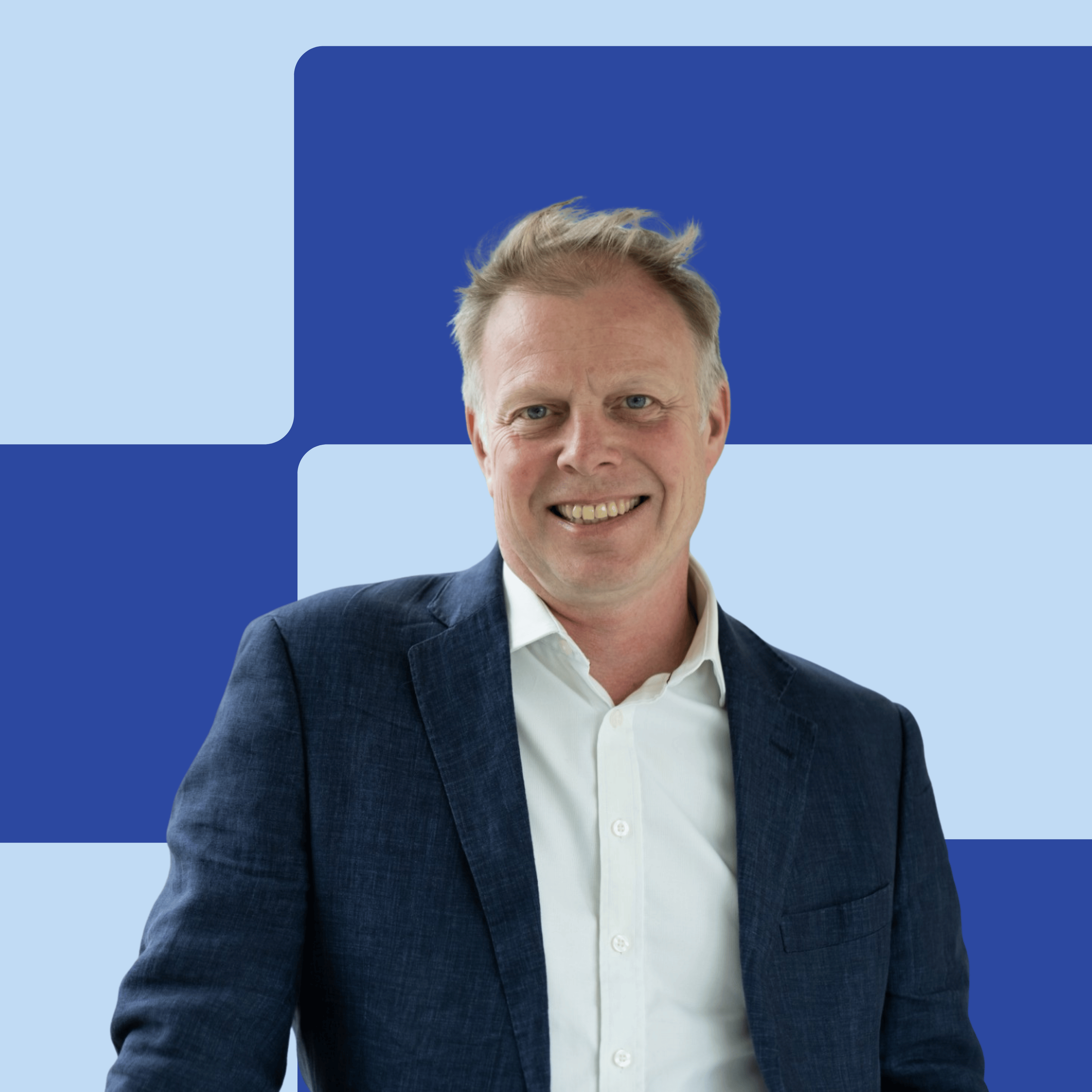
In this episode, I talked with David Gauden, CEO of Blue Earth Therapeutics, about a career that started with a graduate job at Amersham in the late 1990s, long before radiopharmaceuticals were fashionable. David co-founded Blue Earth Diagnostics, helped sell it to Bracco in 2019, then stayed on to build a second company that treats prostate cancer instead of only imaging it.
David is open about both ends of the rollercoaster. He talks about reflecting on a yacht in San Diego after Axumin was approved in the US, and then about starting pivotal trials in February 2020, watching the world stop, and getting them moving again from a shed in his garden. We also get into why he got tired of committees in big company life, how lonely it can be to own the decisions as a CEO with nobody close by to reassure you, and whether Europe has the right conditions to turn great science into scalable companies before it gets squeezed between US capital and China’s speed.
We finish with the quick-fire questions, covering a recent research paper on biomarkers for PSMA radioligand therapy, the best career advice he has had, and the novel he keeps coming back to, Silas Marner.
I run Discera Search, retained executive search for Clinical Development and Medical Affairs across DACH and the US. Building a leadership team at a company like Blue Earth? Message me.
How does David Gauden keep culture strong as a small biotech scales up?
He says Blue Earth Therapeutics tries to stay informal and open, with a de-layered, non-hierarchical structure. As a company grows, you have to bring in different ways to communicate, because a small team sits in the same room and a bigger one isn’t in constant contact. His team went through this at Blue Earth Diagnostics.
How do you test whether a candidate is really driven and ambitious?
David says to ask for examples of how they stepped outside the well-trodden pathways on a project and did something innovative to move faster, such as bringing in other resources. Charles’s point was that if you simply ask ten people whether they’re driven and ambitious, you’ll get ten yeses. David adds that in this industry you still have to keep meeting quality and regulatory requirements.
What is the hardest part of being a biotech CEO or founder?
David says you’re often ultimately responsible for the direction and decision making of the company, and the uncertainty about those decisions is difficult. There isn’t necessarily anyone close by to advise or reassure you unless you go and seek it actively. He says you have to learn to get additional opinions and make sure you have some support.
Do you have to move to the US to build a biotech career?
David says there are probably fewer of the larger organisations in Europe, and definitely space for that to grow. In a globally connected world, he says there’s not necessarily a great reason to relocate to the US if you have a good team and are doing the right things. You can’t ignore the US as a market or a source of capital, so you embrace that and get on a plane to New York from time to time, but he doesn’t see it as a really significant barrier to creating successful companies in Europe.
Can a biotech run several trials with a small in-house team and mostly outside partners?
David says it was definitely possible 10 years ago and more, when they started Blue Earth Diagnostics, and that there are good people working in the consulting landscape. He sees some risks as you start to scale, but likes that people in the company can have some skin in the game. Blue Earth uses a blend of in-house staff and expert consultants, and he thinks you can go too far.
Here’s What You’re In For
- How he landed a graduate job in radiopharmaceuticals before it was fashionable.
- What big company life taught him about rigour, goal setting and connecting science to commercial reality.
- Why he got tired of committees and wanted to be close to a project’s progress every day.
- The San Diego yacht moment after Axumin’s US approval.
- Starting pivotal trials in February 2020 and managing them remotely from a garden shed.
- The part of being a CEO few people warn you about: owning big decisions with no one nearby to reassure you.
- Why proof and clear differentiation matter when a small company goes up against an approved competitor.
- Why a biotech CEO has to deliver the lead program and still keep building the next novel bet.
- How to tell if someone is truly “driven and ambitious” beyond a quick yes in an interview.
- Why Europe risks being the “squeezed middle” between US capital and China’s speed, and why more committees won’t fix it.
Timestamps
00:05 Who is David Gauden, CEO of Blue Earth Therapeutics?
01:51 How did David Gauden get his first job in radiopharmaceuticals?
02:35 What did working at Amersham and GE Healthcare teach him, and why did he leave for a small company?
05:02 What were the highest and lowest points of his career?
07:00 What is the hardest part of being a CEO or founder?
08:27 What does Blue Earth Therapeutics do?
09:51 How does a small biotech compete with Pluvicto and still build a pipeline?
12:17 How is running a diagnostics company different from running a therapeutics company?
14:18 What is the culture like at Blue Earth Therapeutics?
15:53 What should we watch for from Blue Earth Therapeutics next?
16:45 What does Europe have going for it in radiopharma and biotech, and what could be better?
19:21 Do you have to move to the US to build a biotech career, and where does Europe fit next to China?
21:57 Can a biotech run several trials with a small in-house team?
23:01 What is David Gauden's favorite book, recent research paper and best career advice?
Full transcript: David Gauden on A Dose of Reality
Who is David Gauden, CEO of Blue Earth Therapeutics? (00:05)
Charles Spence: In today's episode, I'm joined by David Gauden, who's the CEO of Blue Earth Therapeutics, developing next generation therapies for prostate cancer. David was part of the founding team of Blue Earth Diagnostics, which he then eventually helped sell to Bracco back in 2019, and then stayed on and built a second company, this time redirecting from diagnosing cancer to actually treating it. Blue Earth Therapeutics raised 76.5 million in the Series A at the end of 2024 and currently have two ongoing clinical programs, with their actinium trial recently dosing their first patient in a new phase one trial this July. We're going to go into the radioactive world of RLTs, what it's like building companies in this space, and along the way, learn more about David, his views on the future of RLT, and some career advice at the same time. David, it's great to have you on here.
David Gauden: Thanks very much, Charles. Good to be here.
Charles Spence: Fabulous. So this is getting ready for the EANM. So, a little bit of pressure on us, because we've got to try to get this published in the next seven days. But we'll manage it. You excited for Vienna?
David Gauden: Yeah, ready for some coffee and cake and a bit of science, and connecting with collaborators, vendors and scientists.
Charles Spence: Amen. I've still never been to Austria, so this is going to be my first time as well.
David Gauden: That's great.
Charles Spence: So as with every guest in here, we're going to learn about your career, David, some of the decisions and some of the pieces that you've learned along the way. Then we're going to talk about Blue Earth, who you guys are, what you've done, and what the future is going to look like. And then specific to this topic, we're going to look at perhaps the future of radiotherapy, but also specifically biotech in Europe and the UK and where its position is going to be as the kind of world keeps developing, which I know has been a topic that you've been writing about on your LinkedIn.
How did David Gauden get his first job in radiopharmaceuticals? (01:51)
Charles Spence: But to kick it off, David, nice and simple, how did you get your first job in the industry?
David Gauden: Well, I postponed getting a job in the industry as long as possible by doing a PhD after my initial studies here in the UK. Not to show my age or anything, but my aunt sent me a newspaper clipping of a job advert from The Telegraph for a company called Amersham PLC, which was a radiopharmaceutical company, also a sort of life sciences research, DNA sequencing, protein sciences company, all based around radiation initially. And so that's how I got my first job on their sort of graduate recruitment program in the late 1990s, before radiopharmaceuticals were even fashionable.
What did working at Amersham and GE Healthcare teach him, and why did he leave for a small company? (02:35)
Charles Spence: Yes. So, well, let's go into that, because you've worked in big firms and you've worked in, or currently working in, smaller firms. So what did working at GE and Amersham teach you? What kind of ground skills did you develop during your time there?
David Gauden: Yeah, Amersham was a kind of public company in the UK with an international presence, but it was acquired later by GE Healthcare. So it really became part of a very big company, very diverse company, even within the healthcare division at the time. More broadly, there was trains and banks and Universal Pictures and things at a certain point in time. So I think GE is famous for many things, but some of the things I think that kind of experience taught me was a certain amount of rigour and systematic approach to things like goal setting, creating that cascade all the way down the organisation from the objectives of the company to the objectives of the individual, and then performance management within that. I had good opportunities for training and development of what you might call business skills more broadly. I think GE is a very commercial company, and it also teaches you that you have to connect the science to a commercial reality in the future, and the importance of that as well.
Charles Spence: And why did you decide to step away from that and join or help to co-found something smaller?
David Gauden: I think I got tired of committees at a certain point in time. And I think what I've always really enjoyed is seeing projects progress. I've always been a bit more aligned with the progress of a project than the life of a function. And a small company kind of is that, basically. It's basically a project, or a small number of projects at least initially, and you're very connected, and the whole team is very connected, to the results and the progress of those projects, and you see that every day.
Charles Spence: So when you moved from big into small, what were some of the shocks and what were some of the things you perhaps needed to unlearn?
David Gauden: I don't know if I had to unlearn anything. I was never very good at the political lobbying within a large company. I just wanted to get on and make things happen. So leaving that behind in some ways was great, a certain amount of that. It's necessary in a big company because there's a lot of different stakeholders and oversight, and so there should be. But to leave some of that behind and get back closer to the project and the progress of the individual projects was great.
What were the highest and lowest points of his career? (05:02)
Charles Spence: And then we can start with positive or negative, David. It's up to you. Sometimes it's good to start with the positives. When was there a moment in your career which was brilliant? When was a particular highlight in your career?
David Gauden: Well, I remember when we started Blue Earth Diagnostics, we were two people in an office to start with. We licensed some intellectual property from GE to get started. But a few years later, we managed to get that product, the first product, approved for the staging of prostate cancer, a product called Axumin, in the US. And the Society of Nuclear Medicine meeting that year was in San Diego, and I remember being on a yacht in the harbour in San Diego, drifting around and kind of reflecting on the fact that we just kind of made this happen over a very short space of time, and it was a great feeling.
Charles Spence: Hey, it's hard to beat that. Then let's go on the flip side. When was the particularly challenging, lonely, frustrating part of your career?
David Gauden: Yeah, well, many, many probably. But I would say, kind of one of the most difficult times, again, sort of in the diagnostics, actually, was we had our first product, Axumin, became a successful - kind of really led the way in the next generation of PET imaging products in oncology anyway. But you can't stand still and we needed to kind of keep moving and develop new products in the pipeline as well, and competitive forces were coming into the market. We had our own program at that time on PSMA PET imaging, but we chose to start our pivotal trials, our phase three for that program, in February 2020. And the world promptly went to a very weird and strange place. And so everything kind of ground to a halt, which was absolutely not what we needed to happen at that point in time. And so working out how to get back on track, get the studies running again, manage them remotely in a time of COVID, and do that all while sitting in the shed in my garden, was a challenging time for me and for the whole team.
What is the hardest part of being a CEO or founder? (07:00)
Charles Spence: Yes, and for a lot of people. So let's go on to then, lastly, on your work as a CEO and helping found a company. What is one of the harder things about being a CEO or company founder? What do you think people perhaps don't fully appreciate until they actually go on the journey themselves?
David Gauden: I think I don't have that many experiences necessarily, N equals one or N equals two. I think we're a small company, we're a small operating unit. You're not part of something much larger necessarily, as you are in a big company, and you are often ultimately kind of responsible for the direction and decision making of the company at some level. So I think that uncertainty that one has about those decisions is difficult, and there's not necessarily anyone close by to kind of advise or reassure unless you go and seek that actively. And I think that's what you have to learn to do in some ways, is to try and get those additional opinions and make sure that you kind of have some support as well.
Charles Spence: And that's a fairly current theme on this podcast. Most people, when I ask that question, typically it goes back to the people and the support around them. Because it can get pretty lonely, I mean any part of your job, but I think the higher you get, you can get a little bit lonelier, and having those core group of people around you just keep cheering you on and support you, or you can really go to advice when you're having frustrations or problems. It's probably been the number one advice that we get on this podcast, actually.
What does Blue Earth Therapeutics do? (08:27)
Charles Spence: So let's go on to Blue Earth Therapeutics. So for those who aren't familiar with Blue Earth Therapeutics, what do you do, David?
David Gauden: So we are a radiopharmaceutical therapy company, or a radioligand therapy company. I like to kind of say that we're trying to make those radiopharmaceutical therapies the best they can be. And what we normally mean by that is that we want their therapeutic ratio to be as high as possible. So for every unit of radioactivity that we inject into a patient, we want as much to go to their cancer and help to treat their cancer, and as little as possible to go to some of the organs that are radiation sensitive and may cause toxicity. So kind of increasing that therapeutic ratio. Our initial programs are focused in prostate cancer, targeting the prostate specific membrane antigen. There's a commercial product now, Pluvicto, which does that in this space. And our goal really is to create that better therapeutic ratio, next generation drug to improve outcomes for prostate cancer patients. We're actually developing two different variants of our technology, what we call radiohybrid PSMA technology. We have a lutetium labelled beta emitter, which is in phase two, and then we recently started a phase one trial with our actinium labelled alpha emitter, together with the University College London this summer.
How does a small biotech compete with Pluvicto and still build a pipeline? (09:51)
Charles Spence: Okay. So Pluvicto, Lutathera, they've been in the market for a while now. What are the challenges when trying to build a direct competitor product for a smaller firm?
David Gauden: I think it's all about differentiation. And I think if you have something very novel and scientifically kind of new, you can get a lot of interest around that from an early point in time. I think we really need to make progress and have more substantial clinical data that's kind of then more convincing around the degree of differentiation, to kind of move on, move forward to the next step.
Charles Spence: Okay. So you're getting to the point now where it's really trying to put the proof in the pudding of where you guys are. Okay. Exciting, but probably slightly scary as well to be at that stage.
David Gauden: I think when you're trying to build a company as well, we've started to try and build the pipeline. We have a third asset back in preclinical, completely different mechanism of action, which is more scientifically novel, I would say, and with a different potential in multiple tumors. So you have to kind of start to build that whilst really delivering on the core mission today, which is the lead one or two programs.
Charles Spence: And you wrote a post on that, didn't you, a couple of weeks or months ago, about VC investments and interest, whether it remains in the lutetium, actinium, or do you have to go novel? Do CEOs in this day and age, especially when funding is a bit tighter, do they have to constantly try to show proven but also novel? Is there the constant balancing, or should it always just be, doesn't matter if it's novel, just go where the data is?
David Gauden: Unfortunately, I think it's both. There's obviously a lot of focus on the most advanced program and making sure that that's the kind of most important thing you do. But as we look towards the potential future directions for the company, having other bets, other shots on goal, other value enhancing milestones that accrue over time, whether for future strategic partnerships or future funding of the company, those become important as well. And you can't just focus on the here and now and not think about the future as well.
Charles Spence: Yep. Yeah, absolutely. I don't just do work in radio, speak to a lot of guys in the cell therapy space and many of those are looking for in vivo and trying to come up with a different strategy because I think you have to in this climate.
How is running a diagnostics company different from running a therapeutics company? (12:17)
Charles Spence: Was there any challenges, differences between running a diagnostics and therapeutics company?
David Gauden: Yeah, for sure. But also similarities. I think on the diagnostic side, if you need to go beyond classic sensitivity and specificity as an end point in some of your diagnostic studies in imaging, which you do, I think, often, because in many diseases you can't biopsy the whole body, particularly around the specificity end points. So the regulatory landscape is not well developed necessarily. I think you get into breaking new ground in some of those discussions, and that's difficult. There's also, I would say, on the diagnostic side, fewer partners on the manufacturing side. I think that has its own challenges as well, in terms of the balance of influence that some of those might have. On the therapy side, the whole treatment of a patient is much more involved and goes on for a much longer time through multiple cycles, et cetera. So the patient journey is much more complex, also extremely expensive in the clinical trial setting.
Charles Spence: Yeah. I don't know as much about the diagnostic space as the therapeutic space, and I appreciate the answer is going to vary massively here, but let's say you go from an idea to then testing to then approval, how long would that take with a diagnostic agent?
David Gauden: I think, if you went really fast, and we did go pretty fast on our PSMA PET program, probably from lead selection to approval was about five years, even with COVID, so maybe we could have gone a bit faster even. But I'd say five to seven years is probably the kind of time.
Charles Spence: Okay. And therapeutics, in oncology, from target selection to approval is...
David Gauden: It's already getting more towards eight to 10 years, isn't it?
Charles Spence: Yeah. It's a brutal game, drug development. I spoke to a woman last week and she said, "You know what, Charles, I've worked in oncology drug development for 25 years and I've never been part of a drug or trial that got successfully approved."
David Gauden: Yeah, difficult.
Charles Spence: That must be frustrating.
What is the culture like at Blue Earth Therapeutics? (14:18)
Charles Spence: Well, let's go on to that topic, culture. Culture is critical in any company, big or small. How would you describe your culture, David?
David Gauden: I think we try to be sort of informal and open. No one's idea or comment is not worth hearing. So we try and keep that kind of openness and de-layered, non-hierarchical kind of structure. I think the team is very scientifically rigorous. That's great. And then what I really like to look for in individuals that we bring into the team as well is that they're driven and ambitious to make progress and challenge ourselves to move as fast as possible.
Charles Spence: And how do you test that in an interview round? If you ask ten people that are you driven and ambitious, you'd probably get ten people say yes, right?
David Gauden: I think you just need to get some examples of how they've done something in a project to kind of step outside the well-trodden pathways and do something innovative to make it move faster, or do something else, bring in some other resources, something that enables you to do that. Clearly you can't do it in this industry without also continuing to address the quality and regulatory requirements that you need to do.
Charles Spence: And as a company scales up, what becomes more challenging when you're trying to keep that culture?
David Gauden: We went through this in Blue Earth Diagnostics really in a way, is you need to try and stay on top of, or you need to kind of bring in different methods of communication and interaction, because obviously when you're a small team, you're sitting in the same room together. But as you grow, you're not, or you're not in constant contact with everyone in the team. And so finding those opportunities to communicate.
What should we watch for from Blue Earth Therapeutics next? (15:53)
Charles Spence: Okay, so then to wrap up with Blue Earth Therapeutics, what does the future hold, David? What are the important events or milestones we should be keeping an eye out for?
David Gauden: We're right in the middle of phase two on our lutetium PSMA program. We're seeing data every day, but we'll read out the final kind of analysis on that trial mid next year. Probably a bit later next year, we'll also have got through the dose escalation phase one on our second program. At the beginning of 2028, I would hope that we'll be ready to enter the clinic with the third asset in a completely different sort of setting. So there's a lot of irons in the fire.
Charles Spence: Exciting. So it's a big pivotal point there, mid next year, potentially in time for ASCO, SNMMI.
David Gauden: I don't think so necessarily. Might make a late breaker at ESMO or something, or ASCO GU the following year.
What does Europe have going for it in radiopharma and biotech, and what could be better? (16:45)
Charles Spence: Okay. Then let's go on to European biotechs, the future. We're going to get all your insights here, David. So the EANM is coming up, which is one of the rarer European events that attracts a lot of US companies as well, and of course on the European side. We discussed in our intake, and you've written about it as well on your LinkedIn, that the challenge isn't the quality of European science, it's whether the conditions exist to turn it into scalable companies. So, like a proton, let's start positive. What does the UK or Europe still have going for it today?
David Gauden: Maybe we should start with Positron.
Charles Spence: Positron. Let's go for it.
David Gauden: I think obviously great science, great universities going on here in Europe and in the UK. And there is also good operating experience in radiopharmaceuticals, whether diagnostic or therapeutic. We have companies here that have been working in that space for many years, spinning out of different government institutions, often from individual countries. I think specifically on the nuclear medicine side, in the universities and university hospitals, there's also a lot of integrated nuclear medicine capability from research through clinical, including also kind of on-site integrated production in many cases. So I think there's a lot going for the field here in Europe. I think if we're going on to talk about what could be better, I think just generally, not just for nuclear medicine but more broadly in sort of biotech, it'd be good to be more commercially minded in some of those academic institutions, so that industry is not a dirty word, or creating a spin out is something that people think of sooner. I do see the green shoots of this, and I do see many more universities encouraging that and providing entrepreneurship training for academics and researchers. So I do see that happening. I also saw a talk earlier this week from a professor at MIT, and I think she'd been part of the formation of about 12 companies. So I think we've still got more to be done there. And then the other thing, which is a thorny problem, but some initiative to create more incentives for capital to flow to support biotech, I think is needed. We may never have the scale of the US, but I think there is capital in Europe, and I think finding ways that can be incentivised to flow into assisting small biotechs to get started and make progress would be great.
Do you have to move to the US to build a biotech career, and where does Europe fit next to China? (19:21)
Charles Spence: Yeah. If you were at a VP level, bigger or smaller, and you're working in the radiotherapy or the nuke med space, when you look at the UK landscape, do you still - there's enough room for people to grow into kind of C suite positions? Because a lot of the people that reach out to me and they say, "I feel like I can only get to the next step of my career if I relocate to the US." I mean, there is of course some truth to that, but do you think that is the only way?
David Gauden: I think there's probably fewer of the larger RLT focused organisations working here in Europe. There's definitely space for that to grow. I would say, if you look at the smaller company formation and the staffing of that over time, we're in a globally connected world, there's not necessarily a great reason to need to relocate to the US if you have a good team and you're doing the right things. Clearly you can't ignore the US as a market or as a source of capital, so you need to embrace that and get on a plane to New York from time to time, but I don't think it is a really significant barrier to creating successful companies here in Europe.
Charles Spence: Yep. Well, then, sticking on the theme of globalization, do you see Europe's place changing at all? We're seeing China producing more and more and more early compounds right at a very high quality rate now. Obviously, US funding is the same, right? It's still powerful. So do you see Europe's place staying more or less the same as it is today? Will it need to change over the next few years?
David Gauden: I think there's definitely a risk of being in the sort of squeezed middle here, if you like, between those two things, the source of capital and maybe source of innovation and speed, innovation speed that I think we're seeing from China. For me, it sort of comes down to speed in some ways. And I think we have the quality, we just need to make it move faster. And speed and ambition, somehow, some way, some when, a kind of reduction in bureaucratic hurdles and things that prevent that speed from - whether things like the European CTIS, which seemed like a great idea, but I don't think it's made anything go faster. Sometimes, often, we see doing contracts here can take forever as well. So I think removal of bureaucracy and focus on speed, removing barriers to making fast progress, I think is something we need to kind of really focus on, and the answer is not more committees.
Charles Spence: Yes, then you're straight out, right? Then you're done. That's not your cup of tea.
Can a biotech run several trials with a small in-house team? (21:57)
Charles Spence: I kind of get the feeling that a lot of these European companies having a team of perhaps six to eight in-house people at C suite or critical project management people, and then very largely outsourced CRO. I mean, of course you're going to outsource much of your CROs, CDMOs, also consultants. And I've probably had about five people on this podcast who are running multiple phase twos or threes with an in-house team of probably eight people. I haven't been in the game long enough to know, but for me that seems incredible. Was stuff like that possible, David? If you don't know the answer to that, fair enough. But was stuff like that possible ten, twenty years ago, that biotechs could do that?
David Gauden: Certainly 10 years ago, I think, when we started Blue Earth Diagnostics, or more than that now actually, it's definitely possible. I think there's good people working in that kind of consulting landscape. I do think that there are some risks to that as you start to scale. I also like the fact that people who are in the company may be incentivised in the right way towards the success of the company. There's some skin in the game. So I wouldn't want to overdo it. But we also kind of have a blend of in-house versus expert consultants that work with us. But I think you can go too far.
Charles Spence: Yep. Yeah. I'm seeing that trend.
What is David Gauden's favorite book, recent research paper and best career advice? (23:01)
Charles Spence: Well, look, I think I'm going to wrap up here. So I've got your insights on Europe. I'm going to finish off with two final questions for you. And this is a little bit more off piste, David. So I hope you're ready for it. It's nice, simple, maybe it's not simple, sometimes this really captures people, but what's your favorite book or what's a book you've read recently you've enjoyed?
David Gauden: I like to read. I don't get enough time to read necessarily, but maybe normally on holiday. But the book that always pops back into my mind often was actually one that we had to do as an - again, showing my age - O level text, Silas Marner by George Eliot, and it's just a great story. It's tragic and beautiful and then tragic and then beautiful again. Quite short, but quite easy to read, but very, very powerful.
Charles Spence: Okay, well, look out for that one. So on the theme of reading, the most exciting or interesting research paper you've recently read?
David Gauden: Bit niche, isn't it? I was just reading recently a review by Himisha Beltran from Dana-Farber and colleagues on predictive and prognostic biomarkers for radioligand therapy, particularly PSMA targeted radioligand therapy. How do we find the patients who are really going to get the most benefit from these drugs? Bring those patients into the study and perhaps allow other patients who are not likely to benefit to go off and get something else.
Charles Spence: And then the final question for you here, what is the best or worst career advice you've ever received?
David Gauden: I think really simple advice, particularly when presenting, you obviously do more and more presenting as you get into more senior roles, is just say less but know more in terms of being able to answer the questions. Just keep the messaging pretty crisp and simple, few slides, but make sure you have thought about the answers to questions ahead of time.
Charles Spence: Well, on that topic, I'll say no more, and I appreciate you taking time, David, to be on the podcast.
David Gauden: Yes, great. And maybe hope to see you at EANM in Vienna, Charles.
Charles Spence: Amen.
- More from the podcast: Mats Hansen, CEO Spago Nanomedical: How to Lead a Radiotherapy Biotech
- Hiring for Clinical Development or Medical Affairs? Retained executive search with Discera
- Talk to Charles: Contact Discera Search
- David Gauden: https://www.linkedin.com/in/david-gauden-6847061/
- Blue Earth Therapeutics: https://www.blueearththerapeutics.com/
- Spotify: https://open.spotify.com/episode/2idyLN8djkZdqsond7f6cu?si=6b636ac806aa4ff6
- Apple Podcast: https://podcasts.apple.com/us/podcast/david-gauden-ceo-of-blue-earth-therapeutics/id1736051162?i=1000796247499