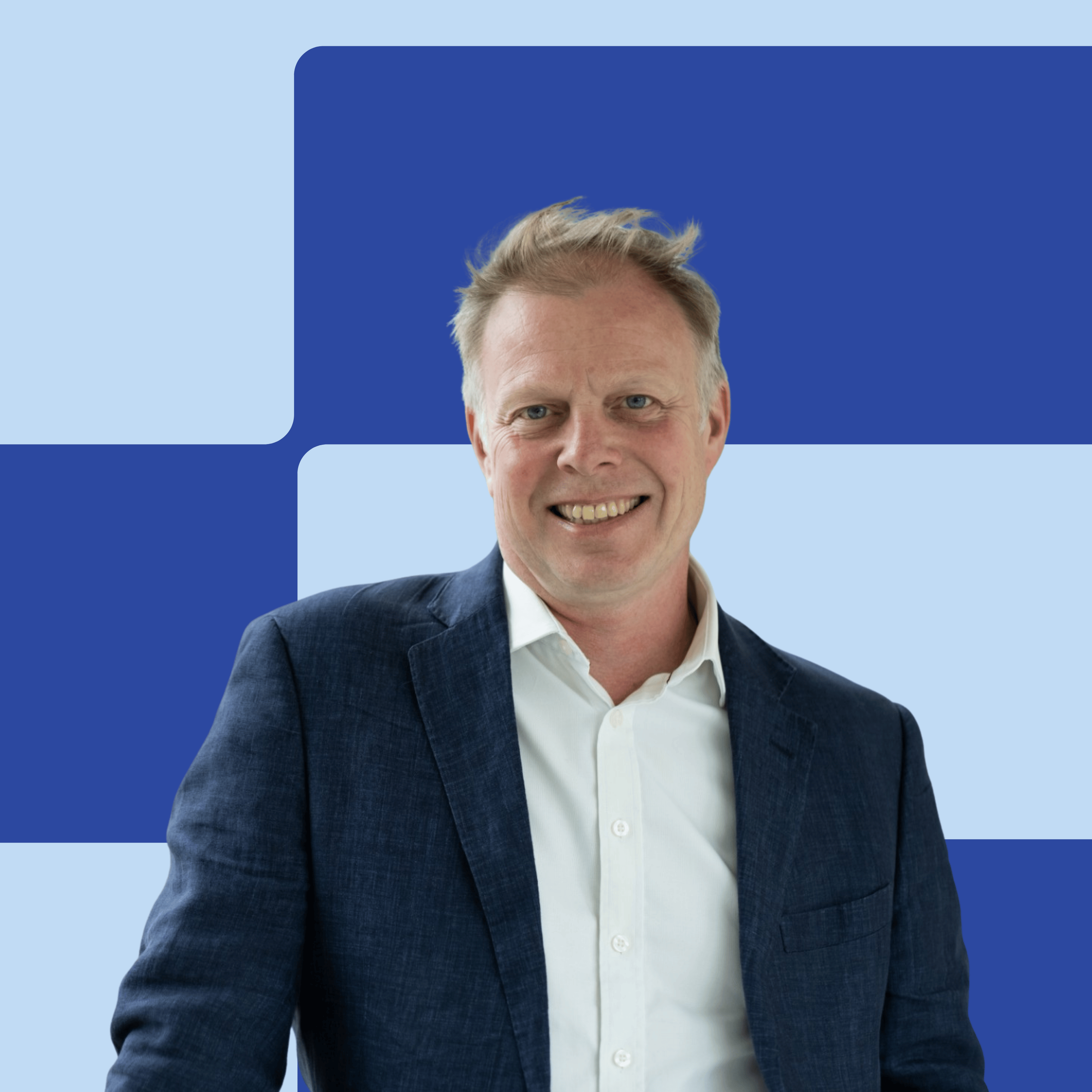
"I have always been wondering to which extent more exposure to biotech would help Germany, and potentially the ecosystem in Europe in general, to get more great ideas in front of investors."
In this episode, I talked with Dr. Johannes Heuckmann, COO and co-founder of DISCO Pharmaceuticals, about building one team across two countries. DISCO has labs in Cologne and in Schlieren, Switzerland, with about 30 people in total, and Johannes explains how the two sites work as one team, why he does not want silos, and how people who work from other places fit in. This is his third company, and he also tells me why the virtual setup he used at Pearl River Bio is not the one he uses at DISCO.
Johannes also goes back to a low point many of us have lived through: a test the whole team was excited about, and the pathologists it was built for not using it. We talk about what he took from that and why he still reminds himself of it. We also get into why biotech is not a visible career path for many German students, and why strong academic science often stays a publication when nobody asks the basic questions. We finish with the best career advice he has been given. Johannes comes from a family of teachers and expected to stay in academia, until an offer to join a new company came along.
Discera Search, retained executive search for Clinical Development and Medical Affairs across DACH and the US. Building a leadership team at a company like Blue Earth? Message me.
How does Dr. Johannes Heuckmann keep DISCO's sites in Cologne and Schlieren working as one team?
Johannes says DISCO wanted to be sure from the beginning that it did not end up with two sites that work for themselves and produce data that does not fit together. Project teams visit the other site to tackle a specific problem, and the whole company comes together at things like the Christmas party and the annual retreats. He says DISCO is way too small to have silos.
How does DISCO hire people who do not live near one of its sites?
Johannes says some people at DISCO are based in neither Cologne nor Schlieren or Zurich, and they visit the different sites on a regular basis. He says remote work gives DISCO the flexibility to get the best people into the team, while the lab teams on the two sides still need to work very well together.
How does a biotech decide between a virtual setup and its own labs?
Johannes says Pearl River Bio was designed as a virtual company because it focused on one or two small molecule programs and would not reuse the same expertise or infrastructure from one stage to the next. The team kept an office and its expertise to steer a network of CROs, and he says it did not lose much of any time during the pandemic. At DISCO, a platform that generates new data over and over needs people and lab infrastructure, and he says the virtual model is not one that always fits.
Why is biotech not a visible career path for many German students?
Johannes comes from a family of teachers and expected an academic career, and he says the other option he saw for many in Germany was big pharma, such as Boehringer Ingelheim and Bayer. Biotech was a completely new world to him once he got exposure to it, and he says people who never thought about it do not ask the questions that could turn an academic idea into a company. He thinks more exposure would help get more great ideas in front of investors.
What did Johannes learn when the market did not pick up the test his team built?
At NEO New Oncology, Johannes was responsible for building the technology behind a test that mapped genomic alterations to stratify patients for targeted therapies. The team was excited about it, but pathologists did not use it. His conclusion was that the team had not understood the market need, that a buyer who does not buy has a good reason not to buy, and he says he still reminds himself of that.
Here's what you're in for
- How to keep two sites in two countries working as one team, with no silos
- How DISCO hires people who work from other places
- When a virtual setup works and when a company needs its own labs
- Why biotech is not a visible career path for many German students
- What a test the market did not pick up taught him about understanding the buyer
- How a team can treat a changed plan as an opportunity and not a setback
- How mapping which proteins sit next to each other can give cleaner cancer targets
- What stays the same, and what changes, when a company moves toward preclinical development
- How asking the usual questions can turn an academic idea into a biotech company
- The best career advice he has been given: do what excites you
Timestamps
01:14 - How he got his first job: a PhD in Cologne and an offer to join a new company
02:28 - Why he has stayed in small companies
03:41 - Building Pearl River Bio as a virtual company, and why DISCO runs differently
06:27 - Career high point: watching an idea become DISCO
09:36 - Career low point: a test the market did not pick up
11:23 - What DISCO does: mapping the surface of cells
17:10 - Team effort, and why a changed plan can be an opportunity
20:46 - Keeping two sites in two countries working as one team
24:39 - What is next for DISCO: moving toward preclinical development and the clinic
26:31 - What he wants candidates to know about joining DISCO
28:12 - Biotech as a career path for German students, and turning academic ideas into companies
32:25 - Where Germany and Europe fit in biotech today, and whether one company model fits all
36:11 - The best career advice he has been given
Full transcript: Dr. Johannes Heuckmann on A Dose of Reality
Introduction (00:05)
Charles Spence: In today's episode, I'm joined by Johannes Heuckmann, who is the co-founder and COO of DISCO Pharmaceuticals, a Cologne-based biotech mapping something called the surfaceome, which I will not try to describe here in this introduction and would much rather leave it to Johannes. Johannes knows a few things about biotech entrepreneurship. This is his third company. He helped build NEO New Oncology, which was acquired by Siemens. Then again with Pearl River Bio, which was then acquired by Centessa.
And he's doing it for a third time, hopefully, with DISCO. It's clearly going in the right direction, Johannes, because there's been a 36 million euro round and then also a partnership with Amgen, worth up to 618 million. We're going to talk about what changes inside a company the week after a deal comes in, what it's actually like turning deep academic science into something a company can run, and why biotech is a great career for academics, but also the current challenges in Germany and perhaps Europe. But Johannes, thanks so much for joining the podcast today.
Johannes Heuckmann: Great to be here. Thank you, Charles.
How did Dr. Johannes Heuckmann get his first job in the industry? (01:14)
Charles Spence: Fabulous. So I keep it simple with my first question to any guests on here. Perhaps I should think about a new first question, but for now Johannes will start with a simple question. How did you get your first job in the industry?
Johannes Heuckmann: Yeah, well, that's an easy one. I guess I was in the right place at the right time. Back in the days, I had just finished my PhD in the lab of Roman Thomas at the University of Cologne. And he, together with Andreas Jenne, who already was a serial entrepreneur in Germany, was contemplating the idea to build a company that is offering cancer genomic science services as a fee-for-service model to pharma companies who wanted to leverage the expertise of a broad spectrum of different technologies. Well, I just happened to finish my PhD, so I was asked to join, and that was an offer that I took because I was curious to see how that would look. Initially I had envisioned my career path more on the academic side, but well, then I joined and never left the field.
Why has Dr. Johannes Heuckmann stayed with smaller companies? (02:28)
Charles Spence: And when researching you, you've gone very much on the entrepreneur, smaller company side. You know, the typical pathways, like you said, you either build a strong academic career or you go into some sort of lab, then into a bigger pharma, then into the smaller biotech. You've kept it more on the smaller company size. Was that by design, Johannes? Is that just kind of how it fell?
Johannes Heuckmann: Well, I think it developed from my first company, due to that offer to join what became NEO New Oncology. But then I very much enjoy building companies and developing ideas into something that then materializes into something meaningful, data that might eventually be a therapeutic or a diagnostic test, as was the case for NEO New Oncology. And there's a broad spectrum of different activities that you do in such a small company, so it's not a narrow activity in your job description but really broad, flexible, changing over time, and that's what's actually exciting me. And so I stayed in the small biotech company field.
Why did Pearl River Bio run as a virtual company, and why does DISCO not? (03:41)
Charles Spence: So let's go into some of these smaller biotechs. You built Pearl River Bio as a virtual company from day one. Now, virtual companies are much more common, especially post COVID, but that was pre-COVID. So you used CROs around the world a year before COVID hit, and then when that pandemic came, I suppose you had the perfect setup. How much of that was a deliberate strategy to be virtual? And what were some of the advantages that happened during that COVID time?
Johannes Heuckmann: Yeah, that's an excellent question. So at NEO New Oncology, to go one step back, we were processing patient samples in our labs. So we really had to have a fully equipped lab and all of the procedures in place, staff that could handle samples that come in. And then when I joined Pearl River, or when we started designing Pearl River and how that could look like, it became very clear that we were focusing on one or two programs for small molecules to target difficult-to-treat mutations in EGFR. And so by looking at those programs, we knew we would go through the different phases of maturity for those programs, but we would not reutilize expertise or infrastructure that we might use for the first stage again at a later time point. So from the beginning, we designed the company in such a way that we do have an office, we have expertise, to really steer all of those activities and interact with the CROs, and kick that off. And as you indicated, during the pandemic, that actually was a very favorable situation for us. So depending on lockdowns or issues in execution somewhere in the world, we were able to steer away to another country and utilize expertise there, and we had a broad network of CROs that we used. So when looking back, we actually realized that we didn't lose much of any time during the pandemic because we had that flexibility. I would not necessarily say that is a model that always fits. So now looking at DISCO, we don't run through one program and just deliver the one therapeutic, but actually we're utilizing a platform that we use constantly to generate new data. And therefore we do need the people but also the lab infrastructure to actually use that platform, generate that new data over and over again, to expand the surfaceome space that we are mapping with DISCO.
What was a high point in Johannes's career? (06:27)
Charles Spence: It's definitely going to be a back and forth balancing act for many companies. We're seeing more and more companies wanting to get people in the office. Sometimes it makes sense, sometimes it doesn't make sense. Sometimes people are seeing that being fully remote is okay, but you start to hit a bit of a wall. So I think we had it before anyway, we had a vast range of fully office versus fully virtual, but I think there's going to be a lot of different operating models now, which comes with different challenges, especially regarding leadership, innovation, building culture. Perhaps we'll go on to that a little bit later. I always love to know people's career high points and low points. You mentioned it when we had our first introductory call. Let's start with positives. What was a particular high point in your career?
Johannes Heuckmann: Yeah. So to me, really high points are when you do see the initial idea develop into something meaningful. And DISCO is an excellent example. The idea goes back to two of the co-founders, Julien Sage and Roman Thomas, who were professors at Stanford and in Cologne, working on small cell lung cancer. They tried to identify targetable alterations in those tumors, did not find any when we're thinking about genomic alterations as we've seen in adenocarcinoma of the lung, for example, and then thought, okay, well, maybe the surface of those cells, because they are structured very differently in the tumor than in a normal lung, could actually lead to new targets and the development of targeted therapies. So they looked into that and were not really successful in identifying those specific differentiating factors between tumor and normal that could be targeted. And then one day they met Bernd Wollscheid, who's a professor at the ETH, and he's been working on mapping and understanding the surfaceome for quite some time and developed a technology that really excited us to look at the surface of cells in general in a completely new way. And so we sat together and thought about how we could build a company out of that medical need that was identified in small cell lung cancer initially. And then also the technology, how would that fit together? How could we make something out of that? And then the idea of DISCO evolved, and so we set it up. And well, here we are now. We have about 30 people in the company and it's delivering a lot of exciting data, and we continue to do so. And so that's really rewarding to me, to say, okay, there's an idea, there's a hypothesis how this could work out, but then really seeing that actually working as we had envisioned, with great people contributing to the journey, that's really rewarding.
What was a low point in Johannes's career, and what did he learn from it? (09:36)
Charles Spence: Fabulous. And we'll go on to that in a second. Let's go on to the less positive. So a moment in your career which was frustrating, lonely. It doesn't have to be, you know, I know a lot of people say a trial failed or whatever. Of course that's very frustrating, but it can be other areas as well. Balancing family, layoffs. So when was a challenging period for yourself, Johannes?
Johannes Heuckmann: Yeah. For me, I would think back to some time at NEO New Oncology where I was basically responsible for building the technology. And I think from a scientific perspective, we were all very excited about what that technology could do. So really mapping a broad range of genomic alterations to stratify patients for targeted therapies back in the days, it became apparent that that's a need for the patients, to be identified, to get on the right drugs. And so we were excited by the test we had developed and what it could deliver. But we realized we could not get any traction when it comes to utilization by the pathologists to really make use of that test. And so to me, that conclusion really was that we didn't really understand the market need. And if the buyer doesn't buy, the buyer has a good reason not to buy. And to really understand that, that really is important. And I keep reminding myself of that since then. But because we had this excitement within the team on the technology that we developed, and then really hitting a little bit of a wall when it came to market penetration and getting this out to patients and being used, that was really disappointing for us back in the days.
What does DISCO Pharmaceuticals do? (11:23)
Charles Spence: Yeah, I can imagine. Well then let's go on to DISCO. You've given already a bit of a snapshot of who you are and what you do, but let's again keep it high level. For those who are not familiar with DISCO's work, who are you and what do you do?
Johannes Heuckmann: Well, we are a company with two main sites. One is in Cologne, Germany, and one is in Schlieren in Switzerland, nearby Zurich. And so we've developed a platform that allows mapping the surfaceome of cells, but we do not only identify proteins that are on the surface compared to those that are in the cytoplasm, for example. But most importantly, what we can actually discriminate is proteins that are in close proximity to each other on the surface from those that are on the surface but not in proximity. And we're using that information to design very specific antibodies to target those proteoforms, so combinations of proteins and their proximity and spatial relation to each other on the surface, to really target tumor cells, for example. That technology can be utilized in any kind of cell. But our front runner programs are oncology programs. And so we're mapping that surfaceome and looking at it like nobody ever did before. And that was really exciting when we first realized that the way that technology was supposed to work actually did work like that in our hands. But we got even more excitement when we got the first data, evaluated that, and really realized that we should expand utilizing that platform beyond the initial project, the small cell lung cancer project that I referred to earlier, because there's so much exciting information and novelty in those data sets that we can really identify exciting new targets on the surface. But then we're not only mapping that surface, but we want to use that information to really identify these targets and go the whole way, from creating molecules, validating those, and then eventually developing those into the clinic.
Charles Spence: Okay. Well, that leads me on to the next question then. So when you take an approach like this, which is a very potentially wide use application, what is the unbelievable outcome with using a technology like this? And what are the risks when having so many things to go after?
Johannes Heuckmann: Yeah, that's a great question. And it's actually a daily challenge, I would say. So we clearly identify a lot more exciting stuff than we initially anticipated. But then, as you were implying, we constantly need to decide what we want to focus on. So which are really the most promising candidates we want to commit to, because it's a lot of work to really validate those targets in a robust way. It's a lot of work to generate binders and validate those before even entering the clinic in the first place. So we clearly do see a lot that we can work on and leverage in the upcoming years. So we do continue to grow and really make use of all of that data that we have. But of course, we also need to focus to really deliver on our promise, not only generate exciting data, but really make use of that information to eventually translate that into a benefit to the patient.
Charles Spence: And you mentioned really exciting. I don't want you to go into too much detail, because I imagine some of this could be proprietary, confidential information, right? But help me understand, in your world, when you're looking at all these pieces, and you said some things which are really exciting, what does that mean?
Johannes Heuckmann: Well, on a very early level, sometimes you do have coexpression, but then you look at the proximity maps that we generate, and even though there's coexpression, sometimes proteins are in proximity and sometimes not. So fundamentally, to me the exciting part is, well, that's a resolution we didn't have before. And so we can work with that. How we translate that is, to quite some extent, identifying really clean target pairs. What I mean with that is, usually you do have some kind of on-target off-tissue toxicity when you're targeting a certain surface marker for a tumor cell. With an example, you can say there's a target you identify on a lung tumor, but then that protein is also expressed in the normal lung. And so expression levels might differ, and depending on how you address that, that might give you a little bit of a therapeutic window, but eventually you also hit the normal cells. And so what we can do with our proximity maps is we look at a target candidate and then we identify where else in the normal tissue that is expressed. And we do identify partners that are in proximity on the tumor cell but are not expressed in those normal tissues where the first target is expressed. So we do get mutually exclusive expression patterns in the normal body, but we do have that coexpression in proximity that can be targeted, for example, with a bispecific antibody on the tumor cell, and therefore get a completely different level of cleanliness when it comes to target selection.
How does a biotech team stay competitive when plans keep changing? (17:10)
Charles Spence: Understood. And walk me through, I'm always interested on the talent side. You're dealing with huge amounts of data, various different angles, having to make decisions on what to prioritize, what not to. What is the difference to a company and to drug development when they have someone like you in charge making those decisions versus someone who perhaps is not as experienced, not as motivated, not as interested?
Johannes Heuckmann: Well, I think in the end all of this is a team effort. As you said, the spectrum we are covering, from utilizing that platform technology to working with those really comprehensive data sets, to validating targets, to generating binders, validating those, that's an expertise nobody can just cover. So we've built an excellent team at DISCO covering those aspects. And as we are moving towards the clinic, we continue to build and get expertise that we do need for preclinical development and clinical development in DISCO. I think what is most important is that throughout the life of a biotech company, you constantly challenge your plans. So you have a plan for the next two years, but then new data may emerge, and that is not necessarily only data that you generate, but it might also be data that a competitor generated, or politics might even impact that. And so it's important to look at those changes and then ask the question: to which extent does that impact our plan and how do we need to change that? And that very often, in my experience, actually is an opportunity. Sometimes it is perceived as, no, we can't do it as we planned, that's a bad thing. Sometimes, of course, it's a challenge to overcome those things. But very often I think it's also an opportunity where, by integrating that into your plans, you might even be faster or develop an even better product. So that kind of dynamic reaction to what's happening inside the company, but also outside the company, I think that's really critical to stay competitive.
Charles Spence: And that's often the hardest part of hiring within biotech and drug development. So much of it is downstream, so much of it is lag, and so the work someone is doing today and the decisions they're making today will really be seen six months, twelve months in the future. And so when you've got that C-suite team who are so involved in this decision making, leadership, building culture, being able to monitor, is this working? Are these people the right people for the team? Are they making the right decisions? Do they understand the vision? Do they understand where to go? That's hard for people like yourself and CEOs to make those decisions. Something we'll come on to a little bit later on in the discussion. But last couple of questions on DISCO. How big are you guys now? I know you said you've got labs in Germany and Switzerland. How big are you in total?
Johannes Heuckmann: We're about 30 people right now.
Charles Spence: 30 people now.
Johannes Heuckmann: And so in Switzerland we have a lot of proteomics expertise, utilizing the platform with our team there. And then in Cologne we also have up and running labs where we do a lot of screening of binders and validating targets. So it's a great distribution of work that we have, while at the same time of course those two sites are heavily integrated and work together towards one goal.
How does DISCO keep its teams in Cologne and Schlieren working as one? (20:46)
Charles Spence: Yep. So when hiring for a company like DISCO, we've got people in Switzerland, people in Germany, and the CEO's over in the US. What is essential? What do you look for in terms of the people's mindset and ability when joining a company like DISCO? What are the advantages when using a model like yours, and what are the challenges sometimes when having an operating model like this?
Johannes Heuckmann: Yeah, well, fundamentally, of course, from the beginning, when we started the site in Switzerland, we said we have two teams, so we need to make sure as a company that there's a great integration between those two sites and really a joint collaboration effort to work on those projects. We wanted to make very sure from the beginning that we don't have two sites that work for themselves and then each site provides data that is not compatible with the others. We in particular had the site in Switzerland because there's quite some expertise on the proteomic side, from Bernd Wollscheid's lab and from Ruedi Aebersold's lab, who's also on our SAB, to really support those activities and be able to also scale and build a team there with that expertise. We do have a lot of talented people here in Cologne, some recruited through the network that we had, some being new hires, but we also do have individuals that are neither in Cologne nor in Schlieren or Zurich, that were recruited and that are contributing in a model similar to what you alluded to earlier. They visit the different sites on a regular basis. There's a lot of optionality to work remotely in a very efficient way nowadays. So we're making use of that flexibility that we nowadays have with remote work to really get the best people into our team, while at the same time of course we do have labs and lab teams that need to work very well together on the two sides. And yeah, I think that works quite well.
Charles Spence: Yeah, okay. So what I'm hearing is you have one or two absolute experts within that lab, either within the company or on the advisory board, who act, I suppose, as that glue, really bringing the vision together. Because that's the challenge when you work in these kind of, I mean, you're not virtual, right? But when you have these kind of different entities, it's like trying to keep people on the same page, the same vision. Do you guys meet up often? When I speak to similar companies, they make a monthly, I don't know, beer session or a quarterly hiking session or Oktoberfest, as is what's happening now.
Johannes Heuckmann: Yeah, no, we do clearly support any kind of face-to-face interaction anybody might want or see as beneficial. So obviously we do have different degrees of travel activity. I just came back from Schlieren earlier this week, and I will be there again next week. Others may just not be traveling so frequently between the sites, but we do have a Christmas party, we have annual retreats, those things where we really make sure the whole company comes together. And then we have specific projects or workforces that do have more regular exchange, visiting the one or the other side, working together to tackle a specific problem or working on a certain process or establishing something on a technological side. And really being more dynamic based on what we want to work on, what we want to achieve, rather than having strict procedures in place that people just follow.
What milestones should we watch for at DISCO? (24:39)
Charles Spence: Yeah, amen. So last couple of questions on DISCO. You've had the financial raise, you have the partnership. What's going to be next for you guys, Johannes? What are some of the milestones we should all be looking out for in the next 12 to 24 months?
Johannes Heuckmann: Yeah, we're excited and we're making great progress in moving towards preclinical development. So DC nomination is clearly on the agenda for us next. And then we take it from there towards the clinic. And that will clearly be a big achievement for this company, to become a clinical stage company. That's clearly currently on the horizon.
Charles Spence: Just a quick question. When a company goes from discovery to preclinical to clinical, I understand a lot of things change, with regs, ClinOps, ClinDev, et cetera. When a company moves from your stage into preclinical and kind of more into that IND prep, does a company change much?
Johannes Heuckmann: Well, we hope that the overall dynamic within the company, and the way we're working together and generating new exciting data, does not change. At the same time though, we will need new expertise in the company. We have already started to hire and have already identified excellent future team members to join. And of course, preclinical development follows a very different framework because it's highly regulated. You need to make sure the execution side is different in the way of daily execution compared to very exploratory early discovery activities. So we want to add this expertise of preclinical development to the company while keeping the dynamic of discovery in the earlier phases of the...
What should candidates know about joining DISCO? (26:31)
Charles Spence: Okay. And if a candidate was listening to this, as you said, you're hiring right now, what would you want them to know?
Johannes Heuckmann: Well, I think in general, biotech companies are a great opportunity to really do a lot of exciting stuff. There's a lot of opportunity to do many different things, to get a lot of exposure to many important decisions, exciting developments, dynamic decision making. So we clearly do offer that opportunity. As I said earlier, we do have this exciting data to look at the surfaceome. That's an opportunity that you can't get often, to really get this kind of data nobody's ever seen before. We have a lot of exciting projects early in discovery where we see a lot of exciting things, to get into the stage where we get molecules that are very specific in targeting certain cells. But then also, being part of the team that is spearheading our preclinical developments and eventually allowing this company to enter the clinic, I think is also an exciting activity. So actually, the broad range that we currently cover, I think, is an exciting opportunity for people that really want to get a lot of exposure to such a dynamic environment. Yeah, so we do have a lot of interactions ongoing, and we don't want to have any silos within the company. We're way too small to have this. We need this kind of constant interaction and alignment between teams. And that's something that we encourage everybody in the company to do, and people that want that, yeah, I think feel free to apply.
Why is biotech not a visible career path for German students? (28:12)
Charles Spence: Feel free to apply. That's it. We want go-getters, people who come work on the team, and I suppose passionate about discovery, cancer. I think it sells itself, Johannes. It sells itself. It's always good to have a senior leader also say it. Let's switch gears here. We've got about ten more minutes left, maximum. Big topic, so I have to make sure I steer this so we don't go over time. And that is about talent and academia. It is about Europe, Germany and Europe's place in biotech in this current world, and it's about giving visibility and sharing knowledge and advice to people who are in the academic space and students. So the question then is, when we discussed in our intake call, you mentioned biotech isn't really a visible career path for German students in the way it is in somewhere like Boston or the US. What was the moment you realized biotech was an option for you? And what would you want more academic students to know about this space?
Johannes Heuckmann: Yeah. I think that's actually a very, very important topic. And to me it was a little bit serendipity, so I just stumbled into that whole thing a little bit. Coming from a family of teachers, to me the academic path was where I thought, okay, that's probably the way that's going to happen. And the alternative, and I may speak for others in Germany, is pharma. So we have Boehringer Ingelheim, Bayer, those big pharma companies here in Germany. And then when I really got that exposure to biotech, that was a completely new world. And so since then I've had the pleasure to get exposure to many really exciting academic projects that I think are worth exploring towards being continued in a biotech company. But often in my experience, the scientific depth of a certain discovery is available. But then because people don't really understand to which extent that needs further discussion, needs to be shaped to become a starting point for a biotech company, often that either remains a publication or there might be a patent filed, and then either there is a pharma company that is interested or not. But more often I believe that's not the case, because the level of validation and the maturity of the program is simply insufficient for a pharma company to really jump on that. And in my experience, what has often been missing is really somebody who's just asking the usual questions. Which problem do you want to solve? How could that look like? How would you get there? And then usually those scientists have the answer. They know the problem. They know how their molecule, antibody, whatever it might be, behaves, what it can do, what it cannot do. And then often shaping an idea of how that could become a biotech company is not really a difficult exercise, but requires a little bit of steering or just asking questions. And in my view, this feels a little bit like, if you never thought about that in the first place, then you don't ask those questions. I have always been wondering to which extent more exposure to biotech would help Germany, and potentially the ecosystem in Europe in general, to get more great ideas in front of investors. And many of those might not make it. That's part of the process. But really getting more of that great science that we do have at least explored, to which extent those might be worth pursuing, and then make something out of that.
Where does European biotech fit in today's world, and does one company model fit all? (32:25)
Charles Spence: And let's go on to then Europe and Germany. You've built a couple of companies now coming out of Germany and Swiss academic institutions. The landscape is China doing a huge amount of discovery, running trials really cheap, the US having the massive financial oomph. So where is Germany and Europe's place in biotech in the world today? What does Germany still do really well that perhaps people underestimate, Johannes? And where are we weak? Where do you think Germany is wrong and could be left behind?
Johannes Heuckmann: Yeah. I think in the end, if the science is strong, there's always a way to move forward. Fundamentally, I think you would always say it might be more difficult to raise similar amounts in Germany compared to the US. But to me, that can't be an excuse not to create those companies and try to develop things. Sometimes it can be beneficial that you don't have that much money, because you really need to focus on what's the killer experiment. What do you do, what do you not do? So you're forced to focus. But then also, in today's world, as you said, we can easily utilize CROs in China if we want to do that, with all pros and cons being considered there. And of course, there's a way to also get access to the US biotech market and the funding environment. So, of course, here again, people matter. We do have an excellent CBO, Ajla Hrle, who is steering a lot of our partnering activities with pharma companies all over the world, with Mark Manfredi, now CEO here from the US, having a lot of exposure to the Boston biotech environment, also VCs there. So we're not limited to saying, okay, we're in Germany, so we are stuck, we can't move. There's a lot of ways to actually utilize what's out there and really make this a success story. But it needs to be designed, challenged constantly, reevaluated, adapted if needed to move those things forward. We actually use companies all over the world for services, in the US, in China, in Europe, some other places. So I think nowadays there's a lot of options on how to get what you need, but it needs to be put together and then executed accordingly.
Charles Spence: Do you think it's purely discussion basis here, Johannes? No one knows the answer, right? But do you see European and German biotechs operating on a model where perhaps they have the discovery, the lab, the science, maybe they have one or two clinical and then the rest is just outsourced? Like maybe companies, let's say take a company like yours, even if you get to a clinical and whatnot, maybe it just continues to remain at 40 people. Do you think that's going to be the future of European biotech?
Johannes Heuckmann: Well, I think depending on the individual company, that may very well be the right fit. But I don't think you can really have the one model that fits all. It very much depends on the science, on the product, on the team, which setup makes most sense. And to me, again, that's one of the exciting things in biotech, because you can't say, okay, that's my playbook, that's how we execute for the next five years. But it's constantly evolving and you need to adapt to a changing world. But I think that's also great fun.
What is the best career advice Johannes has received? (36:11)
Charles Spence: Yeah, okay, good. I like that. Then the final question, Johannes, and then we're going to wrap this up. What is the best or perhaps the worst career advice you've ever received?
Johannes Heuckmann: Huh, that's a tough question. Well, the best career advice might probably be to do what excites you. Just try it out. And I've actually had that multiple times in my career, where I probably did not necessarily follow the standard path, but just tried something, and for whatever reason it worked. And it turned out to be really great. And so turning that around to the worst advice, which I haven't gotten, but I think to say, just follow what everybody's doing might not be what you eventually want to do. It may be a match, but I think it's important to really ask, okay, what do you want to do? What do you want to see? And of course, many of those things, when you explore these, you need to get out of your comfort zone, because just following the others is easier. But at least in my experience, it was quite rewarding to do so.
Charles Spence: I love that. Amen. Well look, hey Johannes, it was an absolute pleasure having you on here, learning more about your career, learning more about DISCO, getting your insights on kind of where European biotech's place is, including the strengths and how we need to adapt. Thanks so much for taking part.
Johannes Heuckmann: Excellent. Thank you so much for having me.
- More from the podcast: Mats Hansen, CEO Spago Nanomedical: How to Lead a Radiotherapy Biotech
- Hiring for Clinical Development or Medical Affairs? Retained executive search with Discera
- Talk to Charles: Contact Discera Search
- Johannes Heuckmann: https://www.linkedin.com/in/johannes-heuckmann-2296393b/
- DISCO Pharmaceuticals: https://discopharma.de/
- Spotify: https://open.spotify.com/episode/10NYaskNkYeR1FsRMwgCSZ?si=27feaaf067f94b78
- Apple Podcast: https://podcasts.apple.com/us/podcast/dr-johannes-heuckmann-coo-of-disco-pharmaceuticals/id1736051162?i=1000801693539