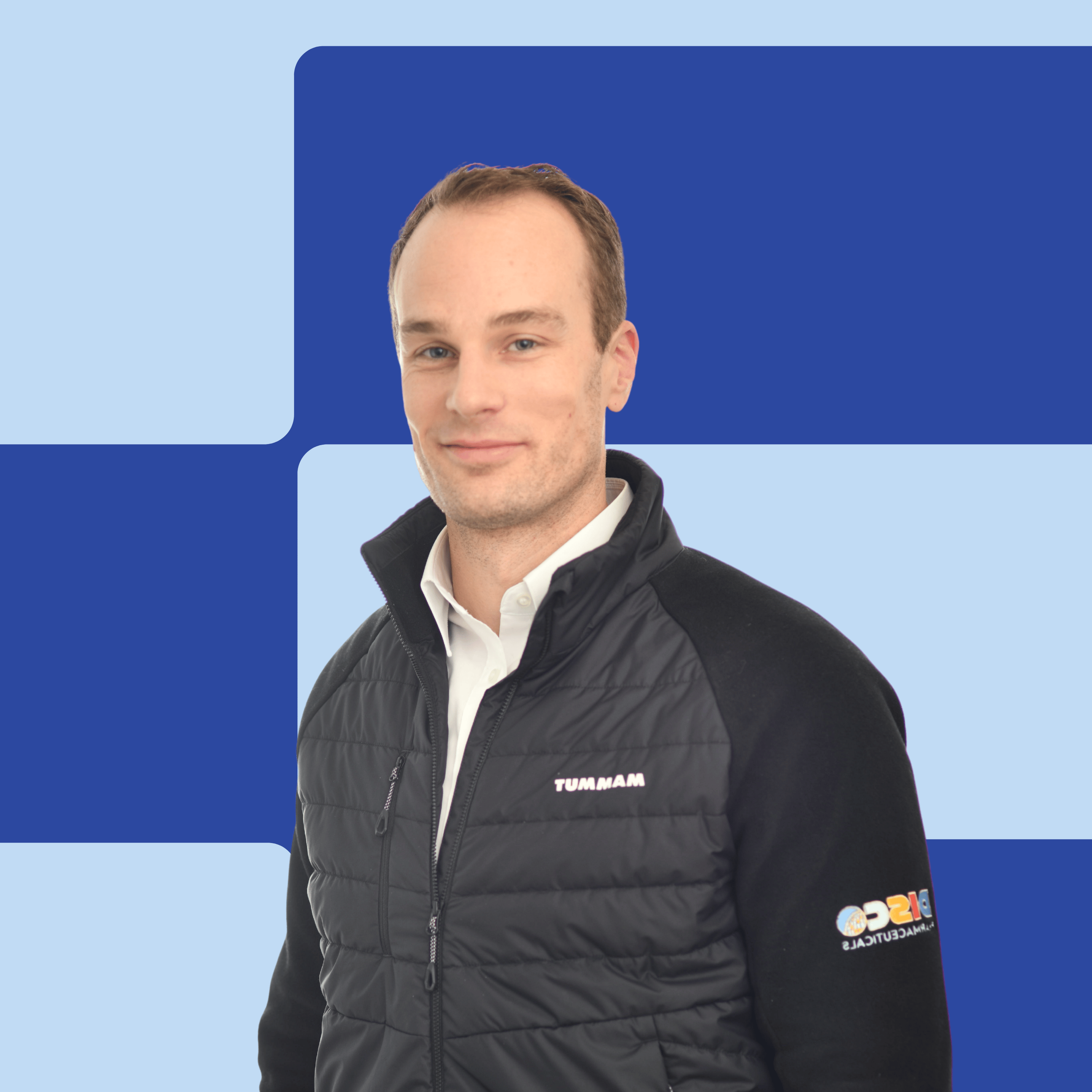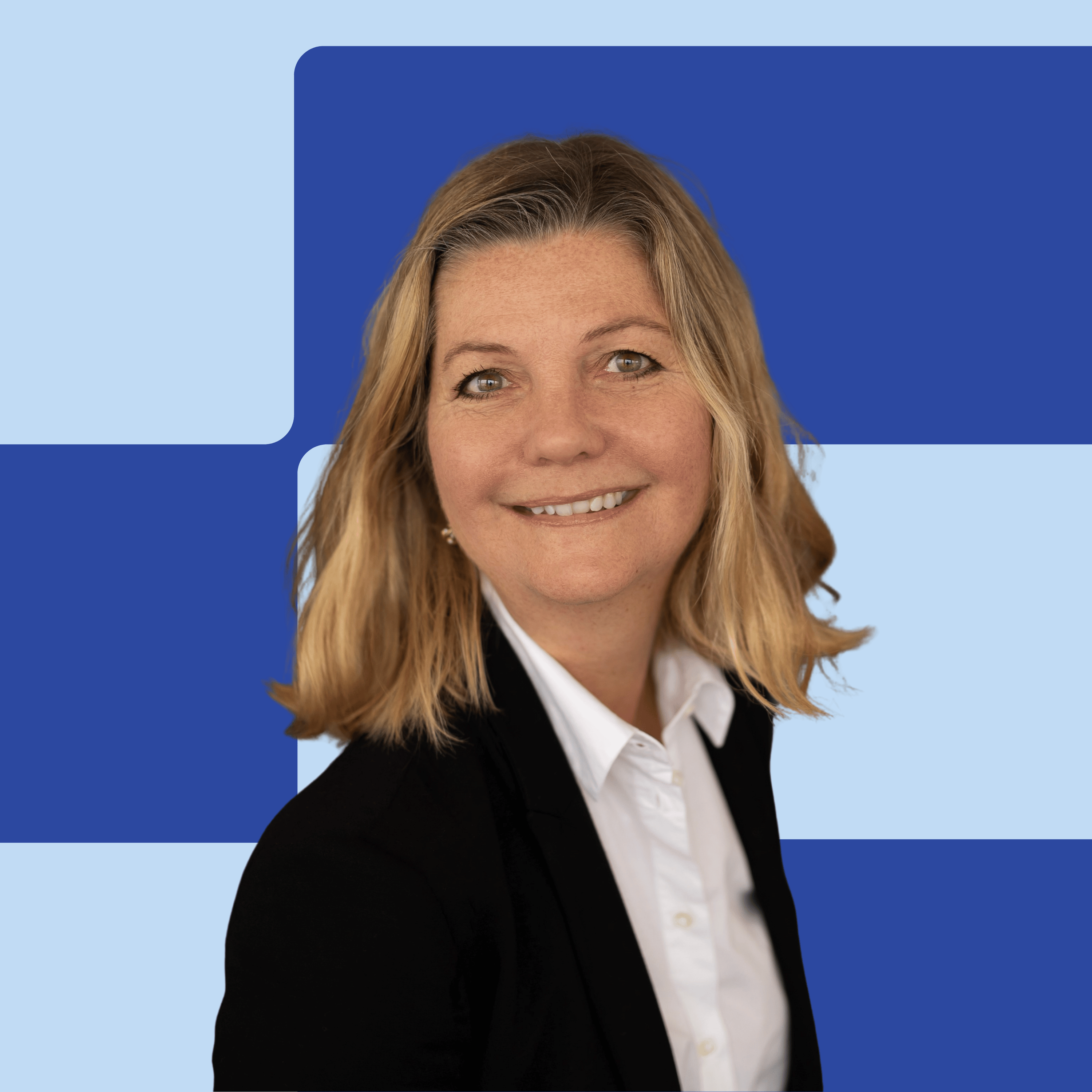
“They try to do a little small talk here to create the impression that they are cool or professional, but you can immediately see that they are not."
In this episode, I talked with Dr. Christina Ornauer, VP Head of Medical Affairs Hematology Europe at Avanzanite Bioscience, about a career that began with a newspaper ad and now has her working to get patients across 32 countries access to treatment. Christina is open about the dark chapter when one of her companies dissolved because of a funding issue, and how it pushed her to work out what she really wanted to do next.
We also get into female leadership, why she would rather have a team member disagree with her than sit silently nodding along, and her very direct view on recruiters who haven't done their homework. We finish with some quick-fire questions, including the book she wishes everyone would read and how she uses AI. Outside of work, Christina is a keynote speaker on holistic preventative health, trained in traditional Chinese medicine and Ayurveda, and she was kite surfing in Montenegro the week before we spoke.
I run Discera Search, retained executive search for Clinical Development and Medical Affairs across DACH and the US. Building a leadership team at a company like Avanzanite? Message me.
How did Christina Ornauer find her direction again after her company dissolved?
Christina calls it a dark chapter, caused by a funding issue, that pushed her out of her comfort zone, across the panic zone and into what she calls the impact zone. It made her realise she wanted to be closer to patients and physicians and to run advisory boards again. She says it made her stronger, and that the learnings from challenges and dark chapters are prerequisites for growing into a new role.
What does Avanzanite Bioscience do, and what does "leaving no patient behind" mean?
Christina says Avanzanite was founded because, despite growing innovation, many patients in Europe still do not have access to new medicines in some rare diseases. Its aim is to overcome those access hurdles by combining two skills: developing an innovation that benefits patients, and bringing it across Europe's diverse healthcare systems through strategic partnerships, bold strategic positioning and pan-European agreements. Her own focus is rare hematology, including pyruvate kinase deficiency and thalassemia.
What advice does Christina give to aspiring female leaders?
She says to watch your mindset, because it can be your biggest obstacle to being bold and speaking up. She advises building a network, having several mentors, and not accepting glass ceiling stories, because for women the sky's the limit. Her main lesson is failing forward: the path is messy and unpredictable, so celebrate your setbacks for what you can learn from them.
How do you get a team to speak up and disagree with you?
Christina reinforces it in team meetings and one-on-ones by praising people who disagree with her, and she keeps repeating the invitation because people are often hesitant. She says that if people stay silent, projects, thinking and strategic insights stop evolving. For people who don't want to speak up in the room, she invites them to message her on WhatsApp, send a text or call her afterwards.
What does a hiring manager expect from a recruiter?
Christina's biggest frustration is recruiters who haven't prepared, have no clue about the company or the candidate profile, and fill the call with small talk to seem professional, which she calls a total waste of time. She expects active listening, awareness of the company, a read through the LinkedIn profile and the right questions about the candidate profile. She wants a long-term partnership with a recruiter who understands the DNA of the company and can match it with the DNA of a candidate, because a bad match costs the company a lot.
Here's What You're In For
- How a newspaper ad led to her first job in the industry
- Why she studies holistic preventative health alongside her pharma career
- How she found her direction again after her company dissolved
- What "leaving no patient behind" means at Avanzanite
- The patient stories from rare hematology that give her goosebumps
- Why she says you can get excellent results for patients without a folder of materials
- Female leadership, failing forward, and why she wants her team to disagree with her
- Her advice for aspiring female leaders on mindset and networks
- What she expects from a recruiter, and what happens when they haven't prepared
- The soft skills that make an ideal candidate at Avanzanite
Timestamps
01:05 - How she got her first job in the industry, through a newspaper ad
03:46 - Holistic preventative health alongside a pharma career
05:09 - Career low point: when her company dissolved and how she found her direction again
08:09 - What Avanzanite Bioscience does and why it exists
09:49 - Rare hematology and the patient stories that keep her going
11:49 - Avanzanite's culture and getting excellent results without a lot of materials
14:02 - What is next for Avanzanite
14:50 - Female leadership and psychological safety
19:04 - How she gets her team to speak up and disagree with her
24:05 - Her advice for aspiring female leaders
24:49 - Her biggest frustration with recruiters
26:54 - What makes an ideal candidate, and how recruiters and hiring managers can work together
29:41 - Quick-fire: the book she wishes everyone would read, and how she uses AI
Full transcript: Christina Ornauer on A Dose of Reality
Introduction (00:06)
Charles Spence: In today's episode, I'm joined by Christina Ornauer, who's the VP Head of Medical Affairs Hematology at Avanzanite Bioscience. Christina is a physician and keynote speaker on holistic preventative health, has launched over 15 products in rare disease, and is currently responsible for ensuring patients across 32 countries get access to treatment. We're going to talk about her journey from the clinic to leading medical affairs on a global scale, the drugs she's worked on, what it actually felt like when one of her companies dissolved and how she had to rebuild her path from scratch, and what female leadership in the industry really looks like. It's gonna be a good one. I've been bugging Christina to be joining here for a long time. Christina, good to have you finally on here.
Christina Ornauer: Thanks for the invitation, Charles. Thanks for having me. Delighted to be here.
Charles Spence: Man, we've just compared holiday notes, aren't we, as two Europeans? So we've had three weeks in Japan versus, what did you call it, extreme hiking?
Christina Ornauer: No, that's in the calendar for end of August. Actually, I did some kite surfing last week in Montenegro.
How did Christina Ornauer get her first job in the industry? (01:05)
Charles Spence: Kite surfing. There we go. Doesn't get more exciting than that. So Christina, in this episode we're gonna of course talk about your career, who you are, the things that shaped who you are today. Then we're gonna dive into the amazing work of Avanzanite and what makes things so exciting there. And then we're gonna finish off by discussing female leadership, with some advice for any aspiring female leaders. We're gonna talk about recruitment as well, obviously my favorite topic. And then if we've got some time at the end, some fun questions. So Christina, just take us back. A question I always ask all my wonderful guests is: how did you get your first job in the industry?
Christina Ornauer: Yeah, that has been an amazing experience. I was working in a hospital back then, and I was on the move to change my life completely because I had the feeling that I can do more for patients. If I'm moving into a space where I can work internationally, where I can really develop products, bring products to patients, work on establishing standards of care and help shape patient care across countries. And that was the very moment when I was doing acupuncture to a friend of mine, and she had a newspaper on her bed beside her. And she said, "Well, now that you are with me, we are chatting a little bit, why not apply for that role in the newspaper?" So very traditional, 25 years back, of course. And I applied for a global role in pharmacovigilance and quality assurance for Novartis generics. And that was obviously a jump into cold water. And I was later moving into developing the first biosimilar worldwide, Omnitrop, in the same company, and it was amazing to learn such a lot of things in such a short time. So it was a kind of vertical growth situation, very similar to the situation I'm in at the moment. And it was starting my career in a sense that was very exciting, and I kept it exciting. I was moving to affiliate roles, regional roles, and then back to global roles in order to have a mix that my curiosity needs. Obviously I have a very curious mindset and I love the adventure of learning a lot from a variety of companies, a variety of cultures. And that's where I am now. So it was worth the adventure, Charles.
Charles Spence: I love it. And the classic applying to a newspaper, so you didn't have to deal with all the nonsense of LinkedIn, fake AI robots.
Christina Ornauer: Yes, exactly. That's terrible evolution, isn't it?
Why is Christina Ornauer passionate about holistic preventative health? (03:46)
Charles Spence: It is. Yeah, a simpler time. All right, well, before we go too deep into the industry work, you talked about the acupuncture just there. So walk me through some of the work that you were doing pre-industry and some of the other activities that keep you close to medicine.
Christina Ornauer: Yeah, that's actually something that I'm very passionate about: holistic preventative health. So I was doing courses in traditional Chinese medicine, Ayurvedic medicine, sports medicine, psycho-neuroimmunology, because I wanted to understand health. And I understood that by combining these specific disciplines, you can understand health a lot easier and explain it a lot easier to your family, to your friends, et cetera. So that was pretty much what I did before and also during jobs in industry, because I find it very inspiring to look beyond doing a classical business role. It's like a hobby that is filled with so much passion that it's even more than a hobby probably. And it developed out of the situation that my family members have been quite sick for quite a time. So I wanted to understand and help. That's why I'm also working as a keynote speaker for preventative holistic health and helping a lot of people. Obviously I love doing that as well, and it's nicely balancing out regular job, if you wish.
How do you rebuild your career after a company dissolves? (05:09)
Charles Spence: Well, then, before we go deep into the world of Avanzanite, I know when we did our intake call, one of the low points in your career was when the company dissolved, which of course still happens today and was fairly common over the last couple of years, right, with the funding situation. So I'm curious to hear from you, Christina. Walk us through that. What happened? What did that period feel like, and what came out of it at the end?
Christina Ornauer: Yeah, that was really, really a dark period and chapter in my life. And it was forcing me into diving from the comfort zone across, over the panic zone, into the impact zone, in order to redefine what I really love to do. And back then it was a funding issue, like you said so nicely. I came to read the poem of Khalil Gibran. Do you know, by chance, the poem of the fear that the water in a river has before it's poured into the ocean? And that poem helped me a lot, when it says like the river cannot go back, and surrender is part of the journey, and fear is part of your transformation process. And back then I realized I want to be closer to patients. I want to be closer to physicians. I want to do advisory boards again, because that was not what I was doing in that specific role. And that helped me shape focus on what really matters to me. And it was not an easy road. The water in the river kept on having that fear, and I kept having these thoughts around what do I need, how much safety, how much direction do I need, or how can I shape my direction personally. And if I'm forced to, I can do that. So you can come to the impact zone even if you have been moving from the comfort through the panic zone. That's possible, and it made me even stronger than I had been before.
Charles Spence: Yeah, what a great answer. And it's a difficult balance. I work with a lot of candidates, and it's about trying to find that balance of staying really focused on the work that you have and being committed to a company, but also keeping your doors and options open a little bit, speaking to recruiters or previous managers or whatnot. Because if the uncontrollable happens, you don't want to be blindsided and feel like it's a shock that takes a few months to recover from. It's a delicate balance, and we're all trying to figure that out.
Christina Ornauer: Exactly. And what you said inspires me to add something that I learned from my career. Once you have challenges in your roles, you get stronger, and you automatically are more prepared for things you cannot anticipate. The massive learnings you create while you are working on challenges, or being in very dark chapters in your life, are prerequisites of growing into a new role and growing even further. That's what I learned.
What does Avanzanite Bioscience do? (08:09)
Charles Spence: Amen. Well then, talking about amazing new roles and companies doing exciting stuff, let's now jump into Avanzanite. So for those who aren't familiar, give us the thousand-yard view, the top view. Who are Avanzanite? What does Avanzanite do? And give us a little bit of the history.
Christina Ornauer: Absolutely. Avanzanite was founded based on the challenges we see in Europe across some rare diseases, because despite the fact that innovation is on the increase, many patients in Europe do not have access to new medicines. And that was basically the reason to build Avanzanite: to overcome a barrier of access hurdles for patients. And that is pretty much what Avanzanite is about. It's leaving no patient behind. That's what we see and feel in our daily work. And it was discovered and created on a simple belief that you need to combine two geniuses: the genius of developing an innovation and product that is benefiting patients, but at the same time the genius of bringing the product across to patients, which is a challenge across the healthcare system diversity in Europe. And it can be achieved via strategic partnership. It can be achieved through bold strategic positioning, through pan-European agreements and Champions League execution, how we call it. It's like seeking this downstream excellence in execution across teams and playing Champions League, as we call it.
What is rare hematology, and why does the work matter to Christina? (09:49)
Charles Spence: Good. And just for any potential American listeners, Champions League is a very high soccer league which only the best can play in. Okay, great. So let's go on to now. We discussed a low point, and then I asked you again on the intake what some of the high points in your career were, and you said doing the work right now has been truly amazing. So walk me through it. You're now focusing on rare hematological diseases. First, perhaps let's just start with what are those diseases? How does that affect patients? Why is that so important? And then finish off with why, for you personally, Christina, it has been so rewarding to be working in this space for the past couple of years.
Christina Ornauer: Absolutely. So I'm working in rare hematology at the moment with a product that is used for ultra rare and rare conditions. They are called pyruvate kinase deficiency and thalassemia, and they are caused by a disbalance of the energy in the red blood cells. They cause a variety of comorbidities and a condition that can be really complex and that can mean true and significant reduction of quality of life in the lives of patients. So what is really uplifting here is when you hear these stories of patients on drug, on the product, that enables them to climb mountains, to come back to normal life, changing career paths, doing what they always wanted to do. And it's stories that, even while I'm addressing it now with you, cause goosebumps for me. So this is really the wind beneath my wings, to listen to these stories across all these countries. And we hear these stories and it's really, really uplifting, and it is exactly what I was thinking when I was working back in hospital. I have the feeling that I'm reaching more patients and creating more stories, unique stories like the ones that I shared with you now.
What is Avanzanite's culture like, and how does it shape medical affairs across 32 countries? (11:49)
Charles Spence: Well, I can hear the passion coming off that, and very elegantly put, the wind beneath your wings. So let's now dive into some more of these pieces. So clearly science and making an impact on patients is important. Tell us about Avanzanite's culture. How does it compare to some of the other companies you've worked with, Christina? Because you've worked with some pretty big firms as well. And how does this culture, this Champions League culture, impact or influence how you run medical affairs across 32 countries?
Christina Ornauer: Now, Avanzanite is in a vertical growth situation, and that might create fear for some of the listeners. At the same time, I can assure you that it also means vertical personal growth. So that comes with it, and there is some creative energy, there is a lot of high pace, and there is a lot of collective energy, there's a lot of real cohesion. At the same time, you need to have a sense of strategy, you need to have a sense of structure. You need what is usually called grit. You need the passion, perseverance, and you need to build exceptional results based on, how shall I say, not a lot of resources. And to give you an example, I used to work in companies where we usually had medical materials and folders that we could bring to our physicians' interactions. And I'm a true believer that if you don't have this material, you can as well create outstanding results. If you ask the right questions to physicians, if you really understand the clinical challenge there for patients and physicians, you can create a lot of benefit for patients in terms of understanding the gaps that you might want to address after you understand and listen to these challenges in the clinics. So you don't need a folder necessarily to be successful and to create some excellent results for patients. And that's what I learned and that's what I'm embracing at the moment, because it's unique. But it's not that I have the sense that there is a lack of resources. Absolutely not.
What is next for Avanzanite? (14:02)
Charles Spence: And then, to close off the Avanzanite chapter, what would a dream next couple of years look like for you, Christina?
Christina Ornauer: Well, we are having a new indication on the horizon. That's sickle cell disease, where we can help more patients, but we are in the launch phase for thalassemia. So the drug is being launched and embedded into a variety of markets in the next couple of months. So there's still a lot to do. I think what is also important for Avanzanite is that Avanzanite is also working in ophthalmology, in nephrology, so we might see new BD products coming to enlarge our portfolio. It remains very, very exciting. It can be hematology, it can be something different.
What does female leadership look like, and how much psychological safety does a team need? (14:50)
Charles Spence: Well then, I am now gonna bring it forward to a conversation that actually kickstarted this podcast idea, and that was when we met at the DGHO on a rainy day in Cologne. And we discussed female leadership, and a term which, transparently, I didn't really hear that often a couple of years ago, but that's psychological safety in the workspace. So let's go through it. You mentioned female leadership comes with what you call a more nuancing, holistic approach, a focus on psychological safety. Walk me through your own leadership journey, Christina, and help educate me, or the audience, on perhaps unique challenges specific to females when they're trying to build their own senior and executive careers.
Christina Ornauer: Absolutely. So to be very provocative, I believe that female leadership is also something I observe in my colleagues. I think that a nuanced, holistic approach, and addressing biases while we work with each other in very diverse cultures and teams, is required. However, I would not see female leadership only in females and male leadership nuances only in males. I think that there is a synergy between the two leadership styles I mentioned, and we can learn from each other. What I found out about psychological safety likewise is that I asked myself, especially since joining Avanzanite, how much psychological safety I really need. On the one hand, it's a wonderful feeling of creating that psychological safety, and I love to create it in my team meetings and beyond. On the other hand, how much do we really need to grow, to transform, to deliver? Do we need such a lot? And sometimes I believe that if you are more into the concept of failing forward, maybe you don't necessarily need a whole psychological safety environment. You just try. It's like trial and error in clinical development, and you grow based on that. So basically my own leadership journey was around internal leadership trainings, DISC model, insights, Myers-Briggs, et cetera. But I think the most I learned was what I learned out of my mistakes. And the more mistakes I made, the more I learned. So you better make sure to be reflecting on your mistakes as well as your great results, and to embrace the candor philosophy, by the way. That's also something we do at Avanzanite. So I think that being radically honest can help you, can trigger feedback to learn, but especially for females it's the art of creating and shaping a network. And I'm personally a mentor for quite a couple of mentees. I love doing that because I learn a lot from these mentee discussions. But I think equally it's important to me to have a good mentor. I have several, several mentors and I learn really, really a lot. Creating networks, some female networks are working a little differently to male networks. So female leaders are invited to understand the atmosphere and the energy and the vectors in female networks and use them as best they can. And please do not accept the glass ceiling stories. If you are not aware of the glass ceiling, you might behave and grow differently than if you are always looking out for a potential glass ceiling. And it's as well for us females, sky's the limit. We should not limit ourselves too much and not overthink female barriers, female leadership silos, et cetera. That's probably my main message. The most I learned out of what I did was really failing forward, doing a lot of mistakes, embarrassing ones.
How do you get a team to speak up and disagree with you? (19:04)
Charles Spence: Do you know what? That's an interesting one, because when people say making mistakes, maybe it's the classic mistake, said something a bit rude or overlooked something. But I think the real challenge for many, again, females, when I've worked with candidates, especially in the pharma industry, which is very scientific, leaning towards introverted, analytical types, and again we're generalizing a little bit here, but from our own experiences, female versus male, females probably like to listen a little bit more, like to perhaps not have a dominant opinion, less ego or testosterone driven. Which then can sometimes mean, if not in the right safety environment, people not putting their hands up, or being strong or being forceful to make sure they get their point across. How can you create an environment where you almost force people to go completely against their grain, to fail forward? So instead of being the nice listening person, they're actually almost being, you know, the asshole in the meeting. Do you know what I mean? So they're failing because they've gone too far forward now. You know what I mean? So how can you do that without really hurting someone, and making them do something stupid?
Christina Ornauer: So, exactly echoing what you're saying, you need to reinforce. That's probably what I do. I'm reinforcing speaking up, and also providing very positive feedback on someone speaking up and disagreeing with me. I love people who disagree with me, be it in a team meeting, be it in a one-on-one. I reinforce that there's nothing to lose if you challenge the status quo. If they challenge what I'm saying, I love that, and it drives us forward together. So it's continuously reinforcing that what they are doing is good. I'd rather have someone disagreeing with me than having silent team members just listening in and nodding to whatever I would be saying. That would feel very non-efficient, very non-inspiring. So I love the inspiration that comes out of good discussions and by speaking up across a variety of personalities and country origins of team members. I learn such a lot. And I learn where we can create a sharing of best practice between countries and where that is deliberately not the case. So if people are silent, there is a lack of evolution of projects, of thinking, of sharpening our strategic insights. And that's absolutely a no go to me. And I need to reinforce it in all the one-on-ones again and again, Charles, honestly, people are really hesitant. They want to stick to the crowd, to the team. They want to be rather silent. But if you reiterate the invitation for them to speak up, they open up, and that's amazing. And then I immediately say, "Wonderful, wonderful thought. I love you disagreeing with me." The whole team remembers that instance, and it's repeated afterwards, of course.
Charles Spence: Well, I think going back to the networking piece, it's so critical, right? Because not every environment will these people have people like you who are going to be backing them and supporting and encouraging this disagreement and openness, right? They might be in an environment where submission is kind of encouraged, or only the loudest, chest-beating voices get pushed forward. And if you are a bit more of a reserved person, again, coming back from Japan, let's use that as an example, a Japanese person who is perhaps in an American environment would naturally struggle, right? And then as you were talking there, I was thinking, okay, in coaching, you have your heroes or your hurdles. And I suppose if someone can have someone like you in their network of coaching, that voice, okay, even though Christina's not here, she's not part of this company, she's still the advocate in my head. What would Christina say here? Christina would say, "Hey, don't worry about them all being really loud and stupid. Just make your point because it's really important." That kind of coaching, that network, that mentoring, that support network, even if they're not in the room, even if they're not in the company, stays with people, and then they can access these different characters in their head, which can help push them to go out of that comfort zone.
Christina Ornauer: Absolutely. And now that we're working in a more technical space, you can speak up differently. You don't need to be silent just because someone is grabbing all the attention and having a monologue. You can put your thoughts in a chat. You can ping me on WhatsApp. You can call me afterwards and write a text message. And I invite and encourage people to do that. And it works out. It's amazing.
What advice does Christina give to aspiring female leaders? (24:05)
Charles Spence: Then final question on this topic, Christina, any final advice for young aspiring female leaders?
Christina Ornauer: There's a lot to say. I think a piece of advice I could give is be aware and be careful in terms of your mindset, because sometimes your mindset can be your biggest obstacle in terms of being bold, speaking up, failing forward, coming to your impact zone, overcoming the comfort zone, because there's no path forward to success. It's messy, it's unpredictable. It's filled with setbacks, and celebrate your own setbacks for the learnings you can create out of these setbacks. That's probably the piece of advice that also helped me a lot in the past.
What frustrates a hiring manager most about recruiters? (24:49)
Charles Spence: I'm gonna steal too much of your time here, so we'll have to make sure I get my favorite topic into this podcast, Christina, and that's gonna be recruitment. And then if we've got time at the end, we'll go through some fun questions. So you've been on both sides, you've been a candidate, you've been a hiring manager. I wanna hear your frustrations. Let's stick firstly as a hiring manager. What is the biggest frustration as a hiring manager that recruiters do? Feel free to vent. And don't say pushing you to join a podcast, because that would upset me.
Christina Ornauer: Indeed, my biggest frustration is speaking to recruiters who have not prepared in a professional way, have no clue about the company I'm working in and the candidate profile I'm looking out for. And they try to do a little small talk here, a little small talk there, to create the impression that they are cool or professional, but you can immediately see that they are not. So that's for me a total waste of time. And I was very polite in recent years, but I'm struggling to be polite at the moment. I'm very, very straightforward and telling them that I don't see there's a match between me and the specific recruiter. So there needs to be a great, great match. And on the contrary, what I'm expecting is active listening skills, expecting someone to be aware of the company, to have read through your LinkedIn profile, to ask the right questions when it comes to a candidate profile, and to create a long-term partnership. I'm a holistic, I'm a long-term thinker, I embrace the thought of having a long-term partnership with a recruiter who really understands the DNA of the company and can really match that with the DNA of a candidate. So to ensure it's the perfect match, because the risk is high not to have a perfect match, and then it costs the company a lot, as we all know.
What makes an ideal candidate, and how can recruiters and hiring managers work together? (26:54)
Charles Spence: Yeah, amen. I think most people, especially with AI, have access to finding hard skills, right? Need heme, need blah blah blah, need them to be based in this region. But I think the difference between the good and the great ones is, here are four people. Here's one that perhaps arguably is not as strong technically, but as a human being, I absolutely effing love them. I think you'll love their proactivity and drive. And that's what you want, because at the end of the day, hiring managers are busy. They've got so much other stuff to think about and decisions. You kind of just want someone you trust to go, just speak to these three people and your job's done here.
Christina Ornauer: Exactly. And when it comes to Avanzanite, and I give you one example, the ideal candidate would probably require a set of soft skills to be able to love the roller coaster journey, to be able to love the vertical growth, the vertical personal growth, like I said previously, to be able to surf the waves and have fun, and not necessarily to know everything, but to know where to look out for knowing everything. So it's about the beauty of, for example, using the right prompts for using artificial intelligence and also balancing that out with your experience, with your intellect, when it comes to polishing the documents you create. And that's something that you can learn and that's not necessarily fixed in a title or a previous company experience. So you need to be really open to candidate selection that is, how shall I say, adding to the diversity of the colleagues at Avanzanite. We're above 100 at the moment already. And then it's the perfect addition, right? It's simple and it's not at the same time, Charles. I'm sorry to say that.
Charles Spence: Yeah, well, I mean, it does require two to tango as well, doesn't it? I think the ideal is a hiring manager who has enough time and ability to describe their culture, the motivational fit, the yada yada yada, and listen to feedback, and at the same time the recruiter can actually ask the right questions and action it. Not often, but let's say sometimes you get one party that is perhaps not delivering, which then makes everyone's job harder, right? Whether it's the recruiter not actually listening, maybe they're trying to take on too many projects, they're not actually that confident in the role, but they're not putting their hands up, or it's the hiring manager with fairly unrealistic expectations. You know, we want a VP, but we want to pay them a thousand euros a month and they need to be five days a week in Zurich or something.
Christina Ornauer: That resonates a lot with me. So you need to come with a package that is attracting the right talent, right? That's essential.
What book does Christina recommend, and how does she use AI? (29:41)
Charles Spence: Final question, Christina. Fun questions here. I've got two fun questions that I want to get through. Everyone likes reading. Not everyone has enough time for reading, but everyone likes to try to read. What's a book that you're currently reading, or what is a book that has made an impact on you or you wish more people knew about?
Christina Ornauer: It's the latter one. It's from Paul Clayton, who is an amazing individual. I try to meet him as often as I can. He has written the book Out of the Fire, that is speaking about silent inflammation in your body and explaining everything around silent inflammation and what that creates in terms of symptoms and conditions, all the organ systems we can think of. And at the same time, he gives great advice on how to manage silent inflammation, which is increasing as we increase in age. It's kind of inflammation in the cells that is quite natural in our body. And if we know about it and if we can manage it, this creates really preventative health. That's a part of what I'm speaking about in my presentations and interactions with people who are interested to explore the topic further. It's easy to understand, but at the same time you need to know the basics, and it's obviously something that I would wish everyone would have read that book, Charles, honestly.
Charles Spence: Interesting. It's a big, big topic that's coming out, isn't it? In fact, we had a guest on here, Hubert Trübel, ex-Bayer and working at a few smaller companies now. He just published a book called The Bullshit Formula, which is about what actually makes a difference, especially when it comes to aging. So I think the two are very similar.
Christina Ornauer: Love it.
Charles Spence: Cool, Paul Clayton, Out of the Fire. And then just something that came to my head when I was researching this, and I had another client who's gonna be joining the podcast soon, and that's the topic of AI. So Christina, what are you using AI for, either at home or work?
Christina Ornauer: Actually, I'm using it at home and for work, and I'm using a variety of systems depending on the outcome I want to reach. And I'm consistently and continuously trying to improve my knowledge about AI so that my prompts get smarter. And what I'm seeing is that a lot of people use AI without understanding the necessity to rework on the outcome AI is providing. So you really need to spend your intellect on what the offering is, or redefine your prompt, or refine your prompt. And that's an art, actually. It's like a wonderful offering that comes from various ends, but it's an art to navigate it in a way that it really helps and supports your purposes. So I'm using it for both. I'm also using it for work. And sometimes I realize how imprecise my prompts are, so I need to work and redefine things. And if I'm still not happy with the outcome, I need to just rework it. And sometimes I don't use AI in that instance. So it's balancing out, depending on what you want to achieve. And it's always the combination between AI and yourself. That's my personal experience at least, and yourself working on the outcome that you get out of your prompts. So it's both. You need to really balance it out.
Charles Spence: Yeah, amen. Well, Christina, it has been an absolute pleasure. So we've learnt about Avanzanite and the amazing work in hematology, female leadership insights there, having to prepare, hope for the best, prepare for the worst, especially if it ever comes to companies dissolving, and in general hearing about what makes good, bad and great recruiters, and hopefully I'm in the great one, but that's for other people to decide, I suppose. No, it's been, hey, an absolute pleasure having you on here. Really appreciate it, and hope to potentially see you in Vienna.
Christina Ornauer: Thank you so much for having me. I really, really enjoyed it, Charles. Thank you.
Charles Spence: Amazing.
- More from the podcast: Patrizio Renzetti, former Head of HR at Arrakis Therapeutics, “The Critical Role of Recruiters”
- Hiring for Clinical Development or Medical Affairs? Retained executive search with Discera
- Talk to Charles: Contact Discera Search
- Christina Ornauer: https://www.linkedin.com/in/christinaornauer
- Avanzanite Bioscience: https://www.avanzanite.com/
- Spotify: https://open.spotify.com/episode/5Jcqh6KWUD9Chz1Ye5U95Y?si=76ae503133ed4149
- Apple Podcasts: https://podcasts.apple.com/us/podcast/christina-ornauer-vp-head-of-medical-affairs/id1736051162?i=1000803628711